
4-Night Campervan Itinerary from Slovenia
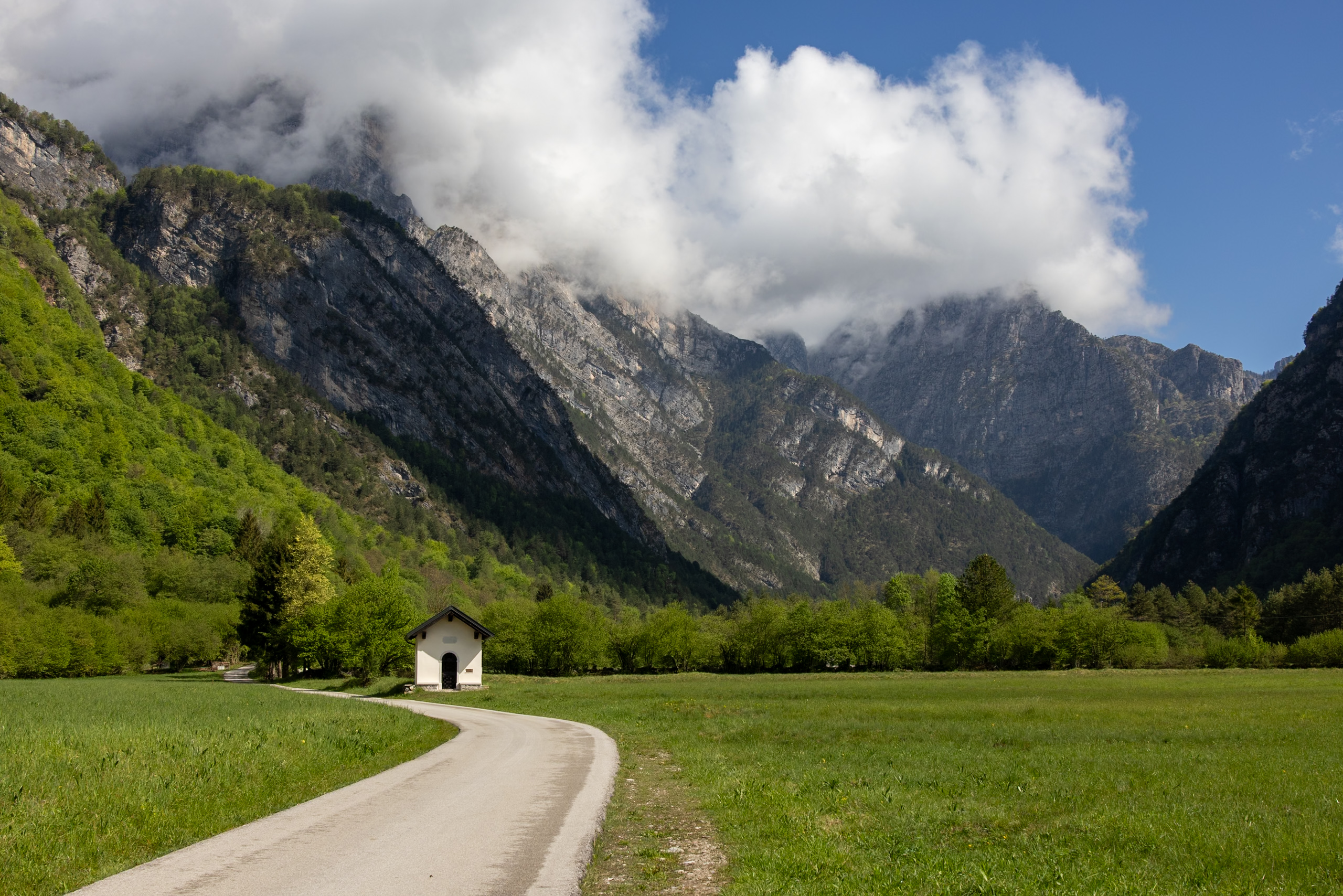
The Friulian Dolomites and the Prosecco Hills of Veneto are one of the most rewarding campervan destinations in northern Italy — and one of the least crowded. This roadtrip itinerary works well as a long weekend from Slovenia, but it has enough variety to fill a full week if you prefer a slower pace.
It is a genuine alternative to Tuscany, Lake Garda, or the main Dolomites: quieter roads, fewer tourists, and landscapes that shift from jagged limestone peaks to vine-covered hillsides within a single day’s drive.
Getting There from Slovenia
There are two routes from Slovenia, and both are straightforward.
The faster option from our Ljubljana base follows the motorway via Nova Gorica or Trieste toward Venice, then turns northeast toward Udine. The more scenic route heads northwest through the Sava Valley, crosses into Italy at Tarvisio, and continues south toward Udine through the Friulian foothills.
Worth a Stop: Gemona del Friuli
Gemona is a small town with a story that stays with you. In 1976, a major earthquake — one of the worst in Italian history, which also affected the Soča Valley across the border — destroyed more than 80% of the town in seconds. It was rebuilt stone by stone, with careful attention to its original appearance.
The old town centre and the Cathedral of Sant’Andrea — partly original, partly reconstructed — are worth a short walk.
A Stop for Prosciutto: San Daniele del Friuli
Whether you take the fast or the scenic route, make time for San Daniele. This small town produces San Daniele DOP prosciutto, considered one of the finest in the world. A rare combination of dry mountain air and Adriatic humidity creates curing conditions that cannot be replicated elsewhere.
Night 1: Lago di Barcis — Emerald Water at the Edge of the Dolomites
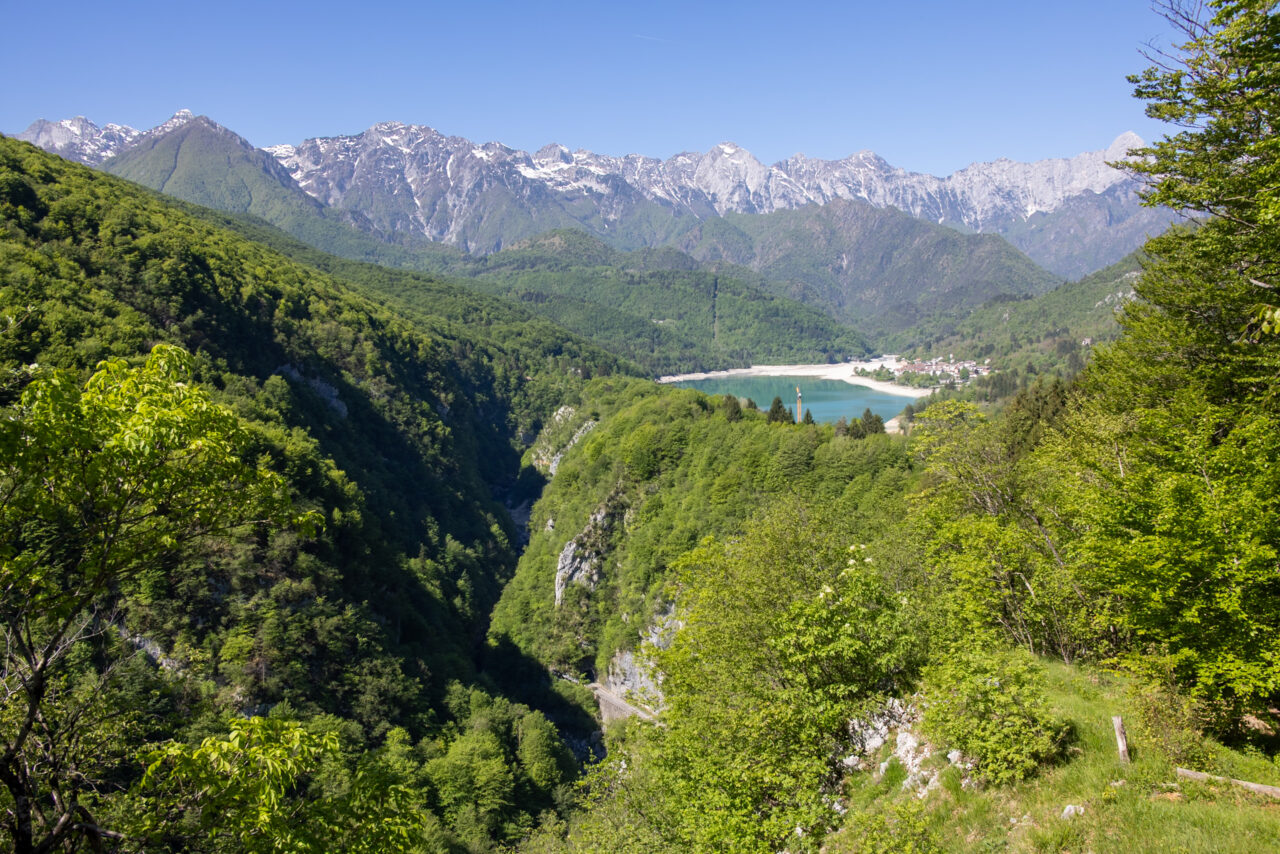
The first overnight stop is Lago di Barcis, a reservoir in the Valcellina valley whose colour immediately recalls the Soča River: an improbable, deep emerald green. The lake lies within the Forra del Cellina nature reserve, on the edge of the Friulian Dolomites Natural Park.
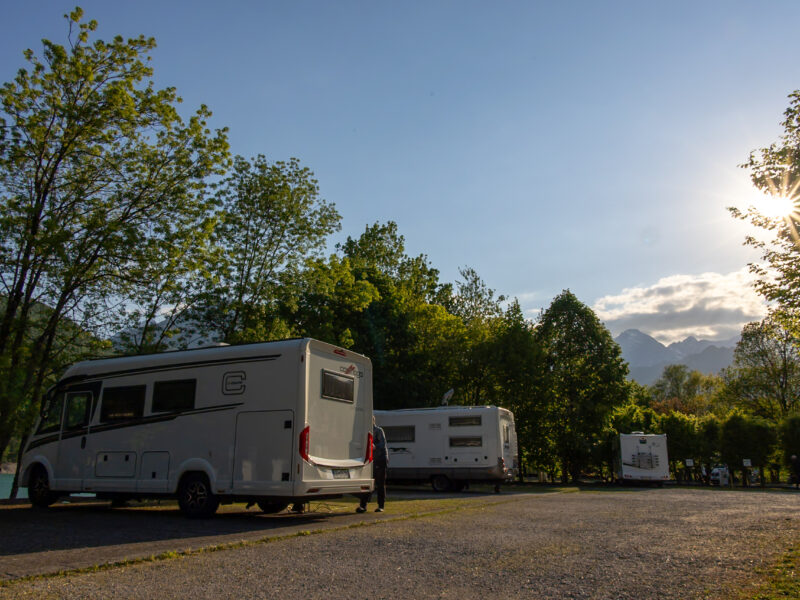
Overnight parking: The camper stop beside the lake has 16 pitches with electricity and water.
On Foot: Sentiero del Dint
The Sentiero del Dint trail starts near the Forra del Cellina reserve visitor centre at Ponte Antoi. The first stop is the Skywalk del Dint — a metal viewing platform over the gorge with a partial glass floor. The path continues through beech forest to two further viewpoints above the canyon and surrounding peaks.
The trail is suitable for children and for those without mountain walking experience. No special equipment is needed.
Vecchia Strada della Valcellina
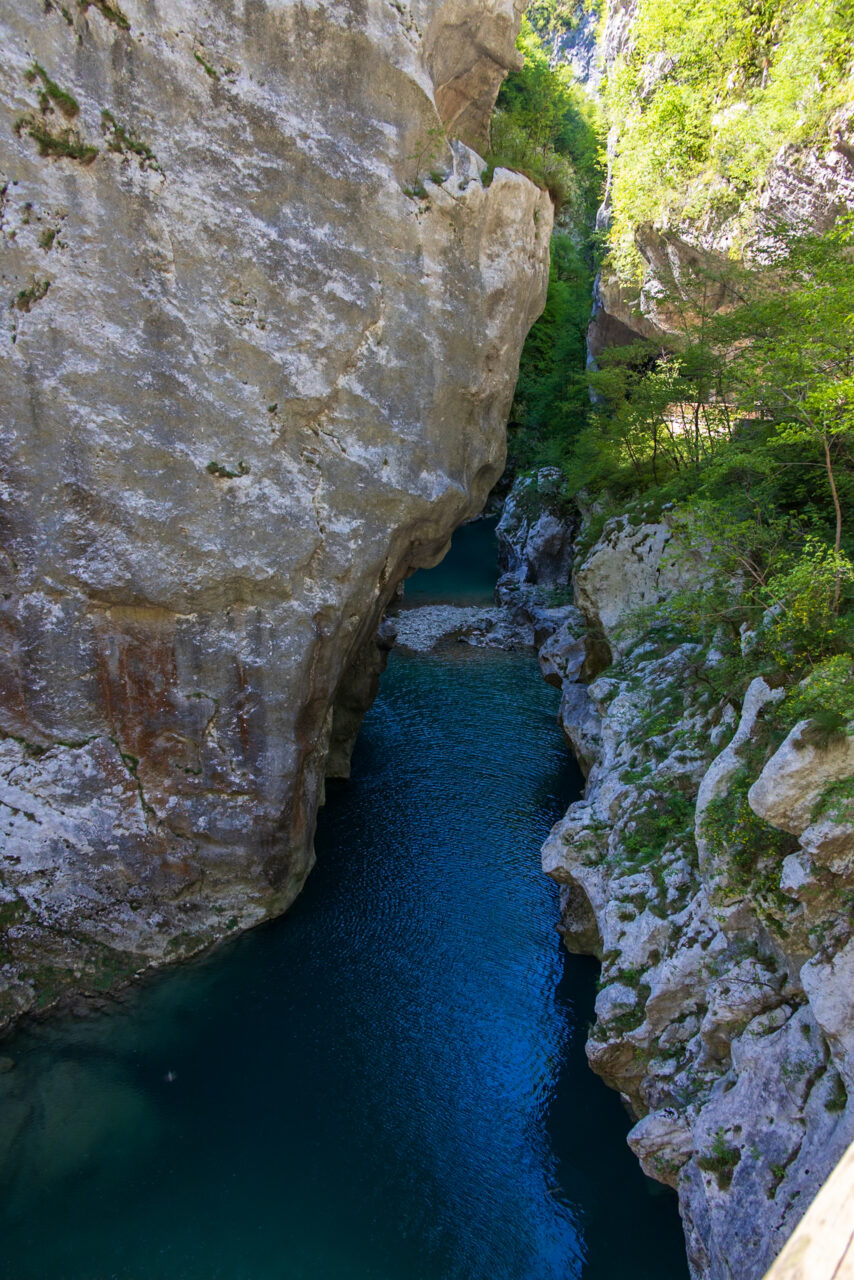
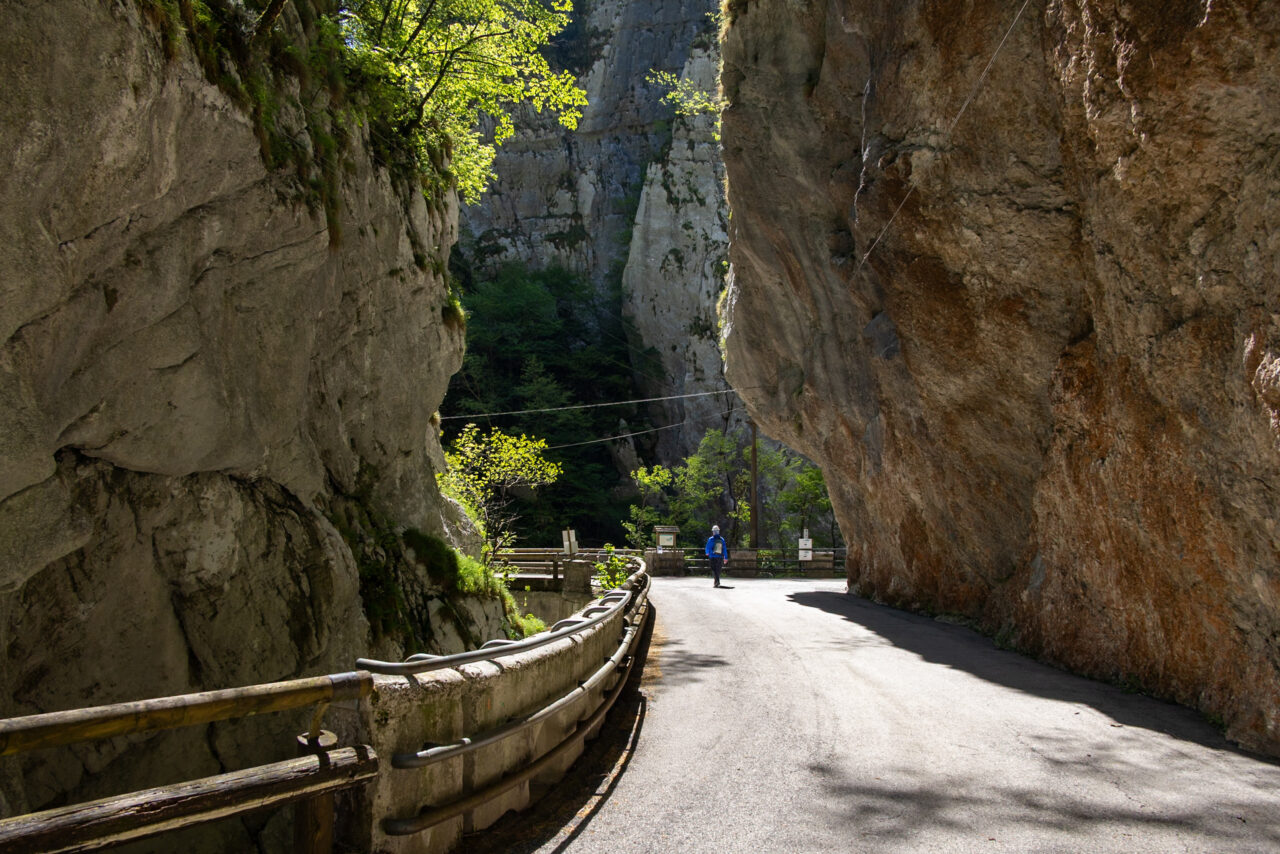
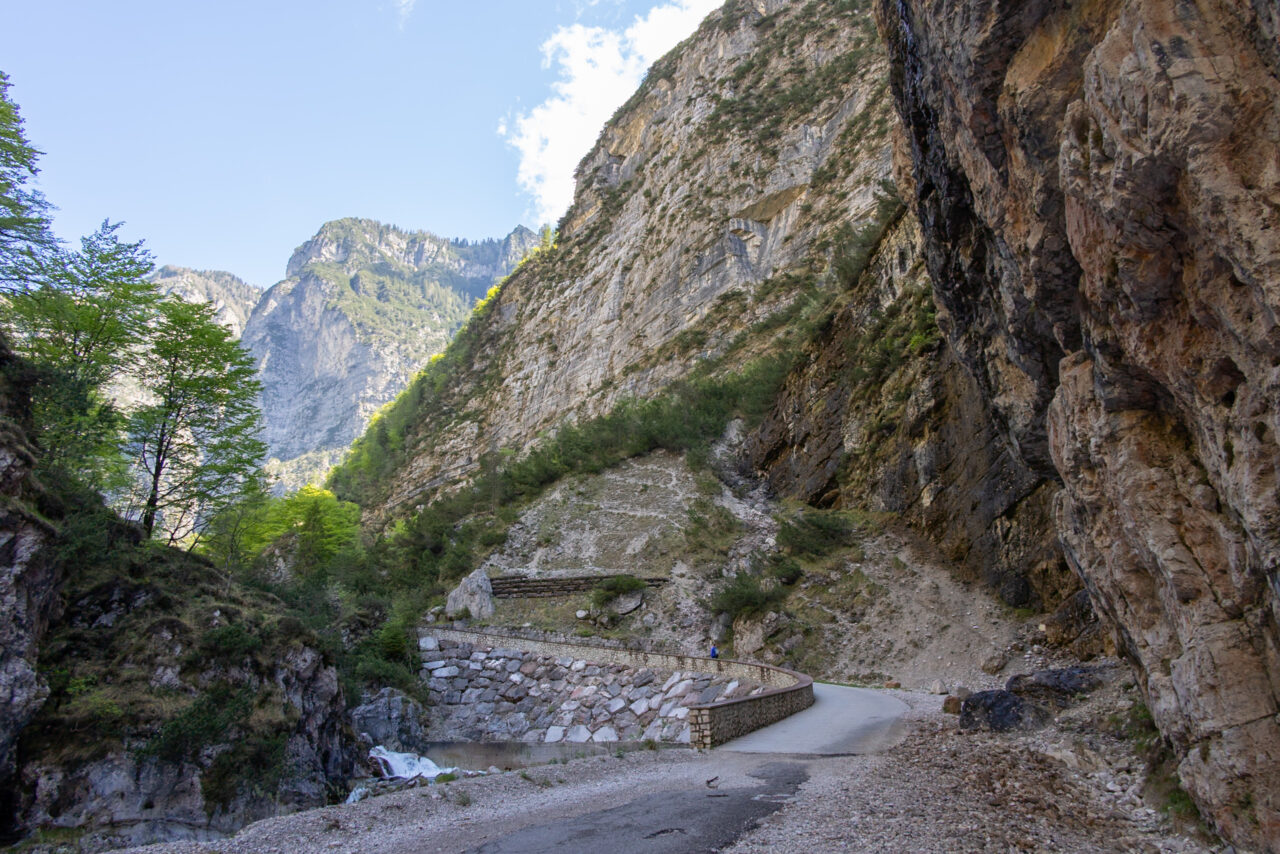
The old road — once the only connection between the Friulian plain and the remote mountain villages — is now closed to traffic and open only to walkers and cyclists. Entry costs €3 per person. The route passes through tunnels and along steep rock faces above the emerald water of the canyon.
For lunch: Rifugio Vallata sits high above the lake. Local food, prepared with care. Booking is recommended.
Night 2: Cimolais and Val Cimoliana
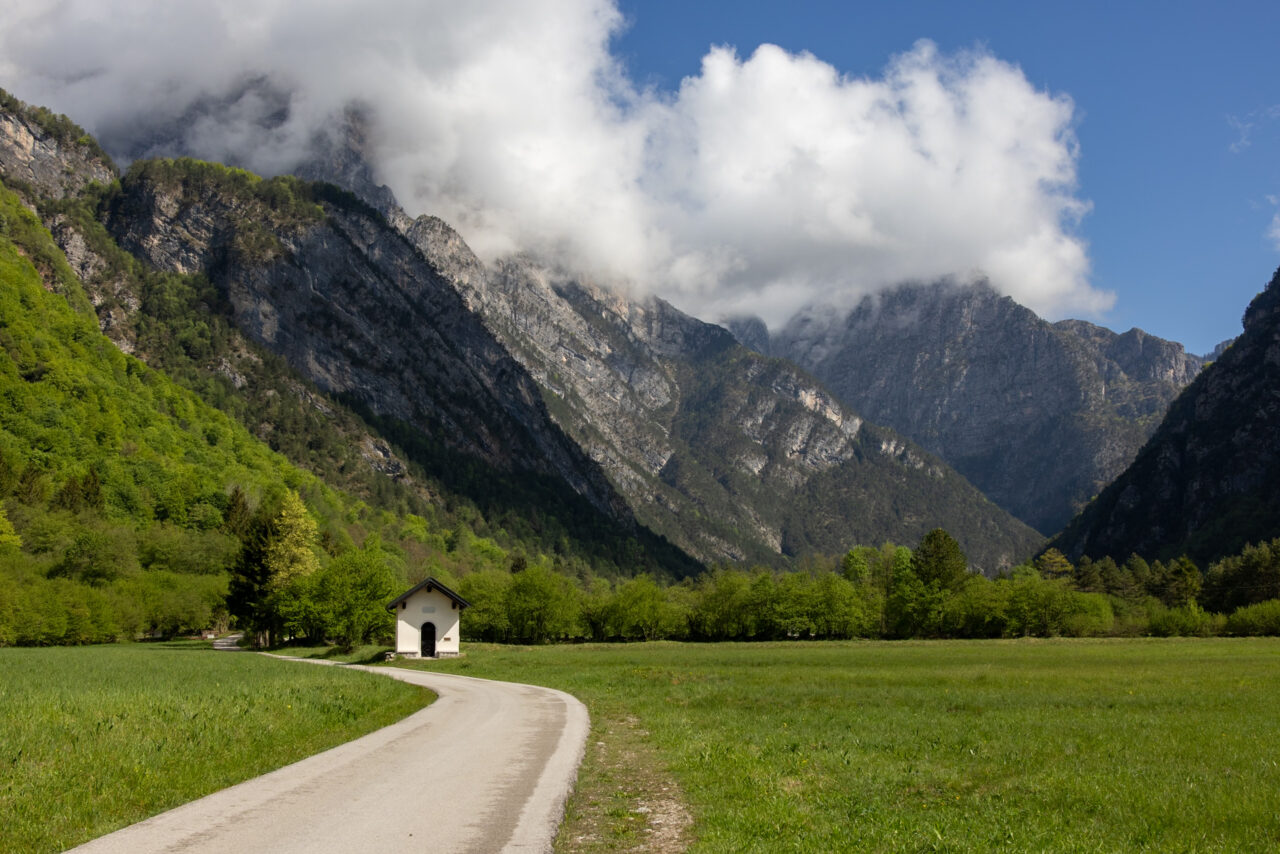
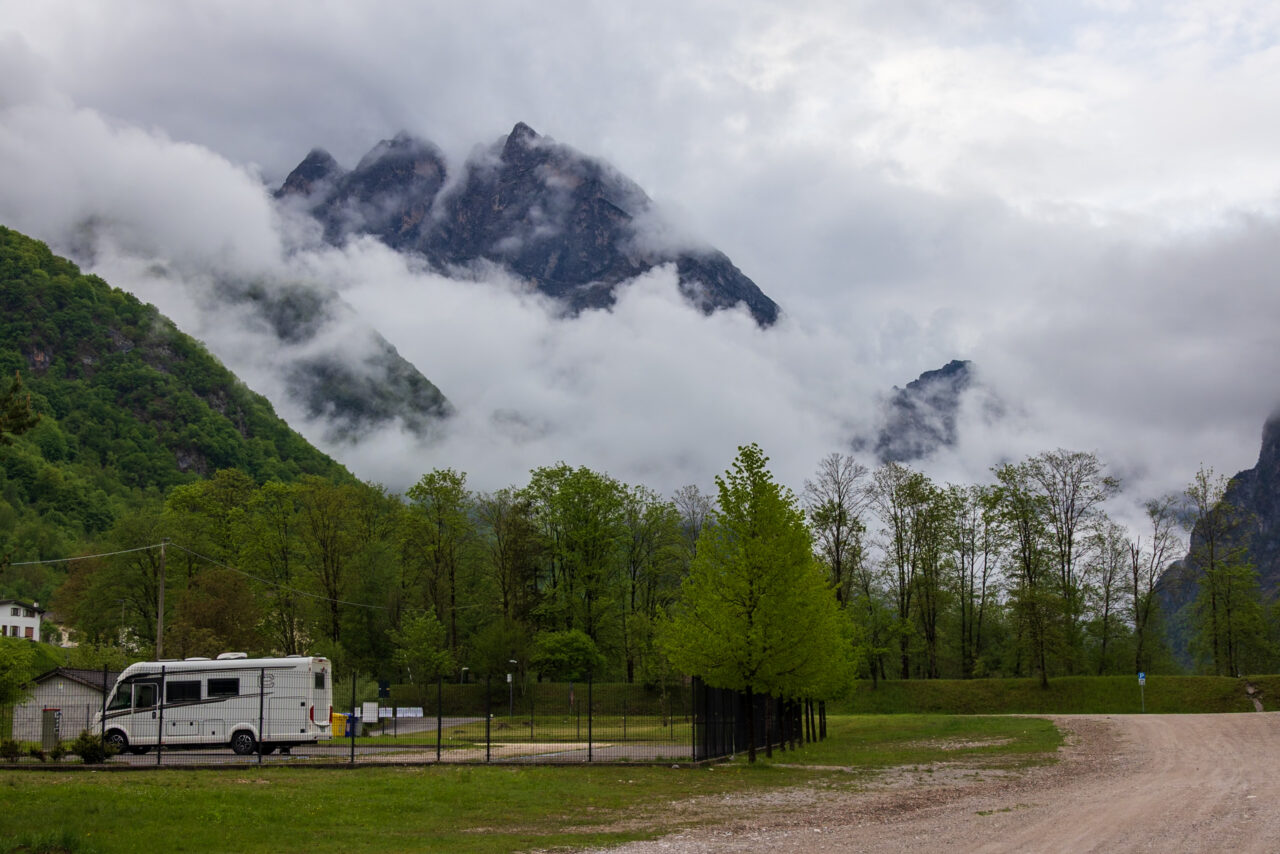
Around 20 kilometres further up the valley, Cimolais is a quiet village with a camper stop: 16 pitches with electricity and waste and water facilities. From Cimolais, Val Cimoliana leads deep into the heart of the Friulian Dolomites. The road ends at Rifugio Pordenone at 1,249 metres.
Campanile di Val Montanaia
One of the most distinctive images of the Friulian Dolomites — a solitary rock tower, 300 metres high, rising from a scree field. From Rifugio Pordenone to the viewpoint is around 50 minutes on foot. In April or May on a weekday, you are unlikely to meet anyone.
Day 3: Erto, the Vajont Dam, and Longarone
This section of the route is not for those seeking only pleasant views. It is for those who understand that some landscapes carry history that deserves attention.
The Vajont Dam
On the night of 9 October 1963, approximately 270 million cubic metres of rock fell into the Vajont reservoir. The resulting wave overtopped the dam and swept down the lower Piave valley. Between 1,917 and 2,500 people died, among them 487 children. The dam is still standing, at 262 metres, and has never been used again.
Visits to the dam are guided only. Booking in advance is required.
Nights 3–4: Conegliano and the Prosecco Hills
Conegliano is the gateway to the Prosecco region. The surrounding hills were added to the UNESCO World Heritage List in 2019. The Conegliano Valdobbiadene Prosecco Hills are a managed cultural landscape shaped over centuries, with steep slopes planted in a distinctly chequered pattern of vines, woodland patches and hillside villages.
Where to Stay: La Casa Vecchia, Santo Stefano di Valdobbiadene
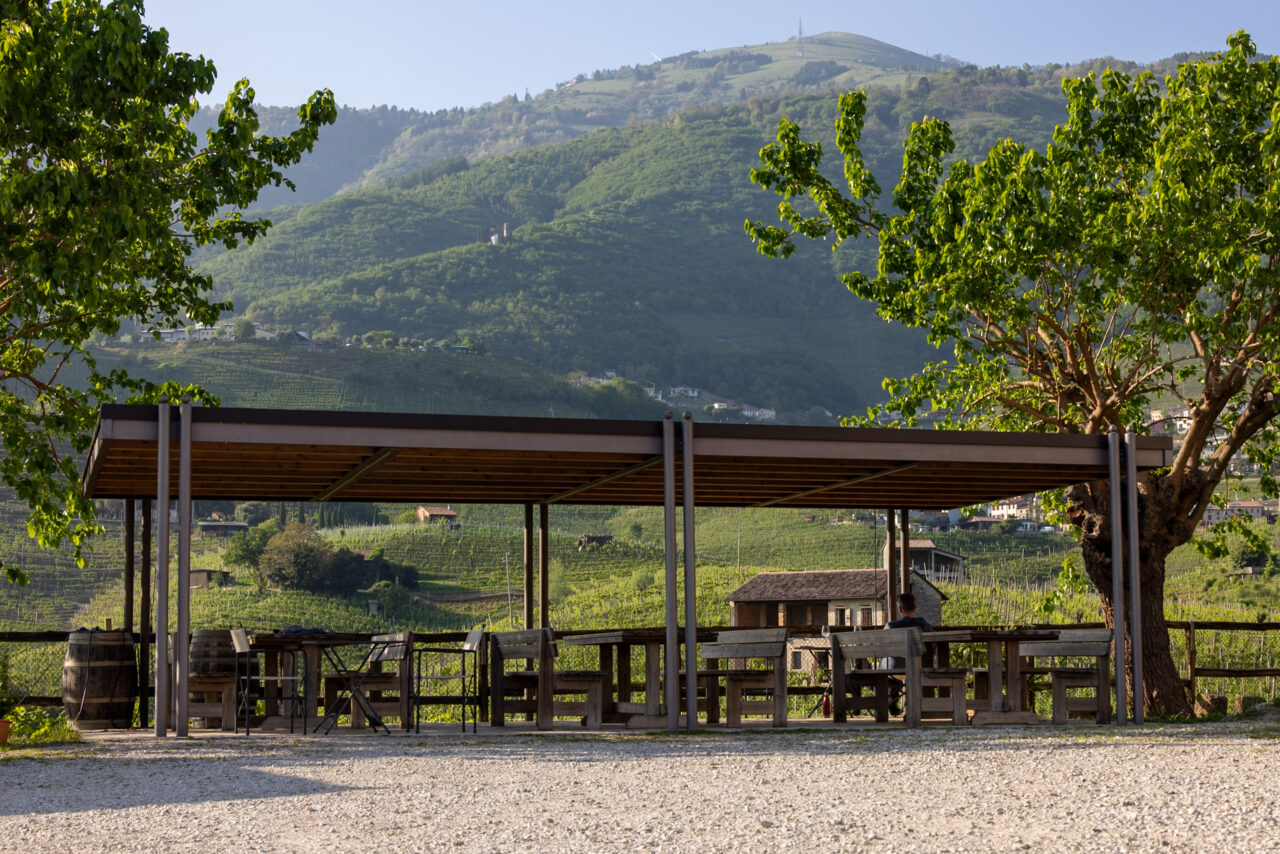
La Casa Vecchia is a working winery that offers campervan parking among the vineyards in exchange for a tasting or a bottle or two. You park with vineyard views an hour before sunset, taste the wine, eat something local, and take the evening at your own pace.
Day 4: The Prosecco Hills by Bike
The fourth day works well without a fixed plan. Cycling between villages on quiet roads, passing cellars with open doors. Valdobbiadene is the main town in the area, but Cison di Valmarino, Rolle, and Refrontolo are equally worth exploring.
Practical Information
Overnight Stops
- Barcis (Night 1): Camper stop beside the lake — 16 pitches, electricity and water
- Cimolais (Night 2): Village camper stop — 16 pitches, electricity, waste and water facilities
- Prosecco Hills (Nights 3–4): La Casa Vecchia, Santo Stefano di Valdobbiadene — or other wineries and camper stops in the area
Best Time to Go
Late April through June offers the best conditions: no crowds, green landscapes, and comfortable temperatures. The Val Cimoliana road is a different experience at weekends in summer. Check for any temporary closures before you leave.
Worth Adding If You Have More Time
- Bassano del Grappa: The Palladio bridge, a compact historic centre, and grappa tastings
- Marostica: A hill town with a living chess game played in the main square (September)
- Return via the Cadore Valley: Through Forni di Sopra or via Sauris, past Zoncolan and Tolmezzo, back toward Slovenia