Silence, wildlife and landscapes most visitors never find
Karst plains, ancient forests, brown bears and the quiet canyons of the Kolpa river. Nejc Trpin, geographer, guide and photographer based in Slovenia, describes four days by campervan through the lesser-known south of the country.
The Pivka basin: a slow start in karst country
Morning in the Pivka basin is not loud. A train labours up the steep line somewhere near Narin. The Church of the Holy Trinity watches over the Javorniki hills, and pine trees shift gently in the breeze along the edge of a disappearing lake near Trnje. Light moves slowly across the karst landscape, as if it too has no desire to rush the day.
My pack is ready. My thoughts not quite. But I know why I am here. I am not looking for landmarks. I am looking for the places where the tarmac ends and the story begins.
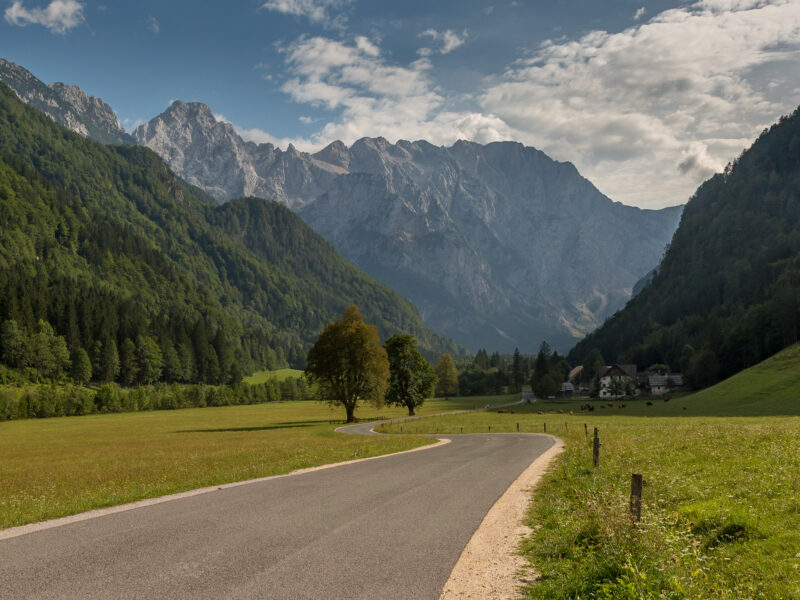
This is the part of Slovenia that does not appear on many itineraries. The country’s south — Notranjska, Kočevska, the Kolpa valley — is quiet, unhurried and largely unknown outside Slovenia. Which is exactly why it is worth four or even seven days.
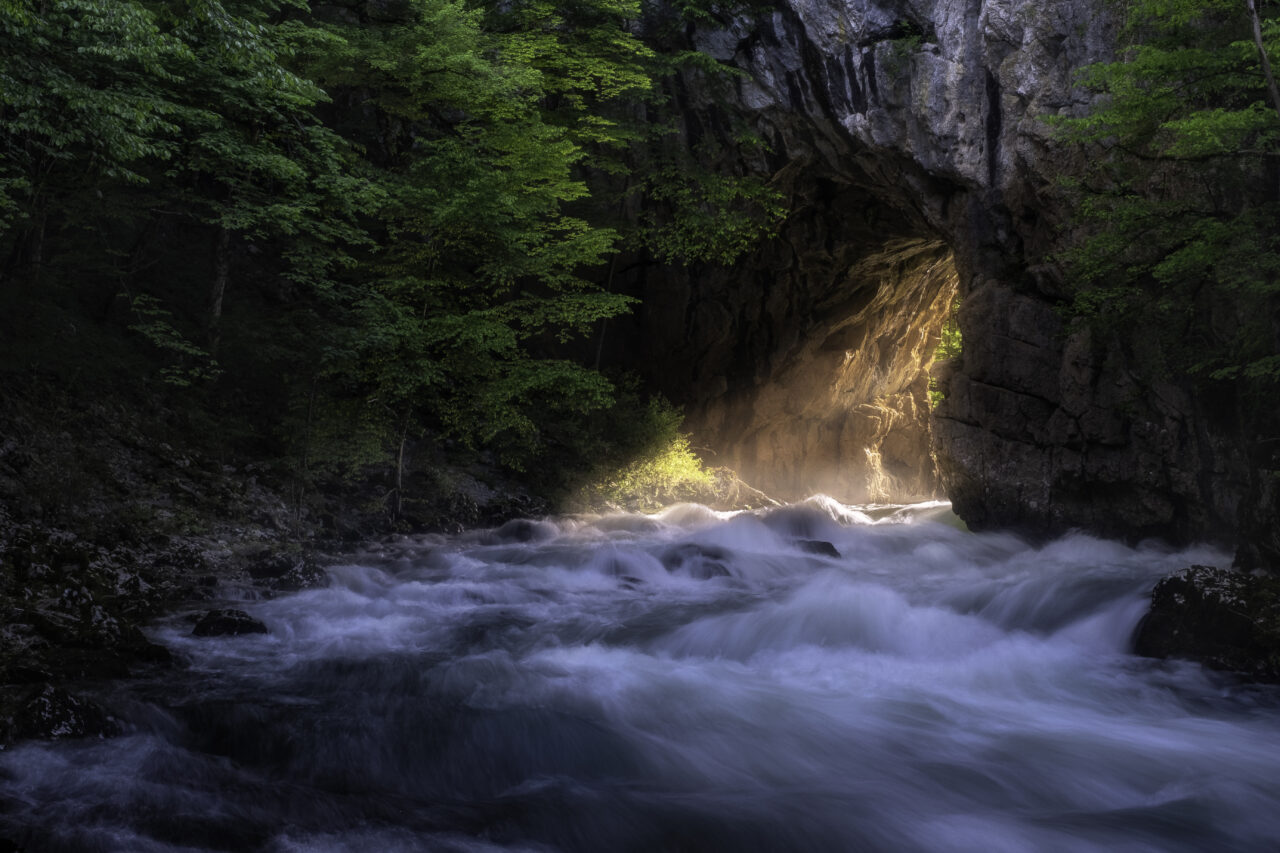
Snežnik and the Dinaric wilderness: the Slovenia most travellers miss
Before Ilirska Bistrica I turn left. The landscape closes in as the road climbs towards Snežnik. Forests thicken. The signposts become fewer. There are no dramatic viewpoints at every bend — everything here is more restrained, more hidden. That is precisely where its power lies.
A ruin emerges from the treeline like an apparition. The remains of Mašun castle. The Snežnik massif and its surroundings are proper Dinaric wilderness — raw, quiet, almost forgotten. Most visitors drive past because it does not announce itself. But if you slow down and listen, it tells you more than any postcard.
Wind scours the exposed ridgeline above the treeline. The path to the summit is just the sound of leaves, a distant bird call and the feeling of being somewhere that does not require an explanation. The view stretches from the Kvarner Gulf to the Alps. The sun drops slowly behind the ridge. Some images stay.
Lake Cerknica: a landscape that runs on its own calendar
At Cerknica, nature turns a new page. There is no permanence here — only a cycle. A lake that fills and disappears. You could set a calendar by it. Every time I visit it looks different. This time, the water is still high, and the light across it is something I have stopped trying to photograph properly.
The Cerknica polje — a karst plain that floods seasonally — is one of the most unusual landscapes in central Europe. In spring it can be a vast, shallow lake. By midsummer it may be completely dry, grazed by cattle. Rare birds nest here. It is a place that rewards return visits.
Brown bear watching in Slovenia: the moment the journey stops
Night comes quietly, somewhere near the Croatian border. In the shelter of the forest, next to a wooden hide, I wait.
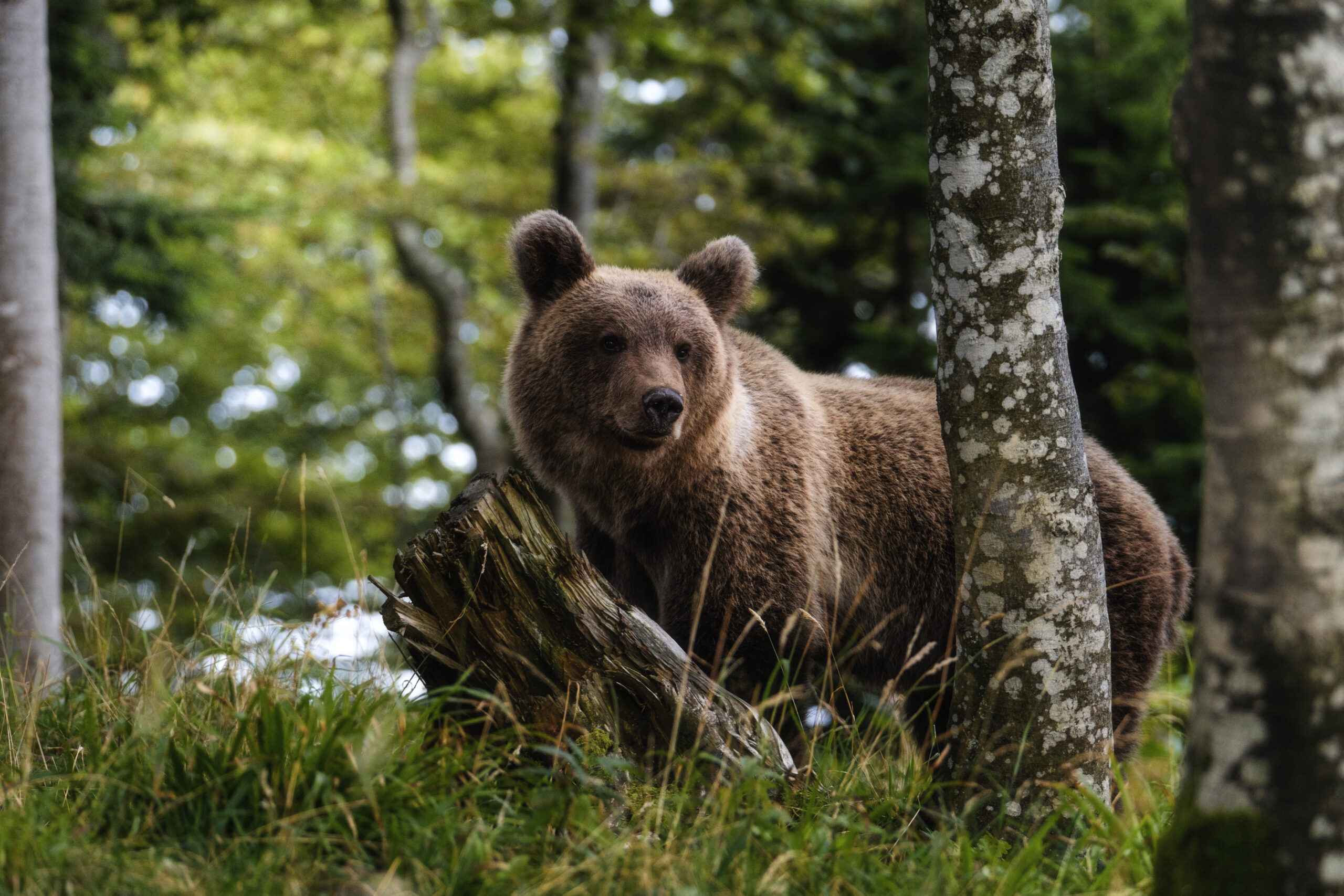
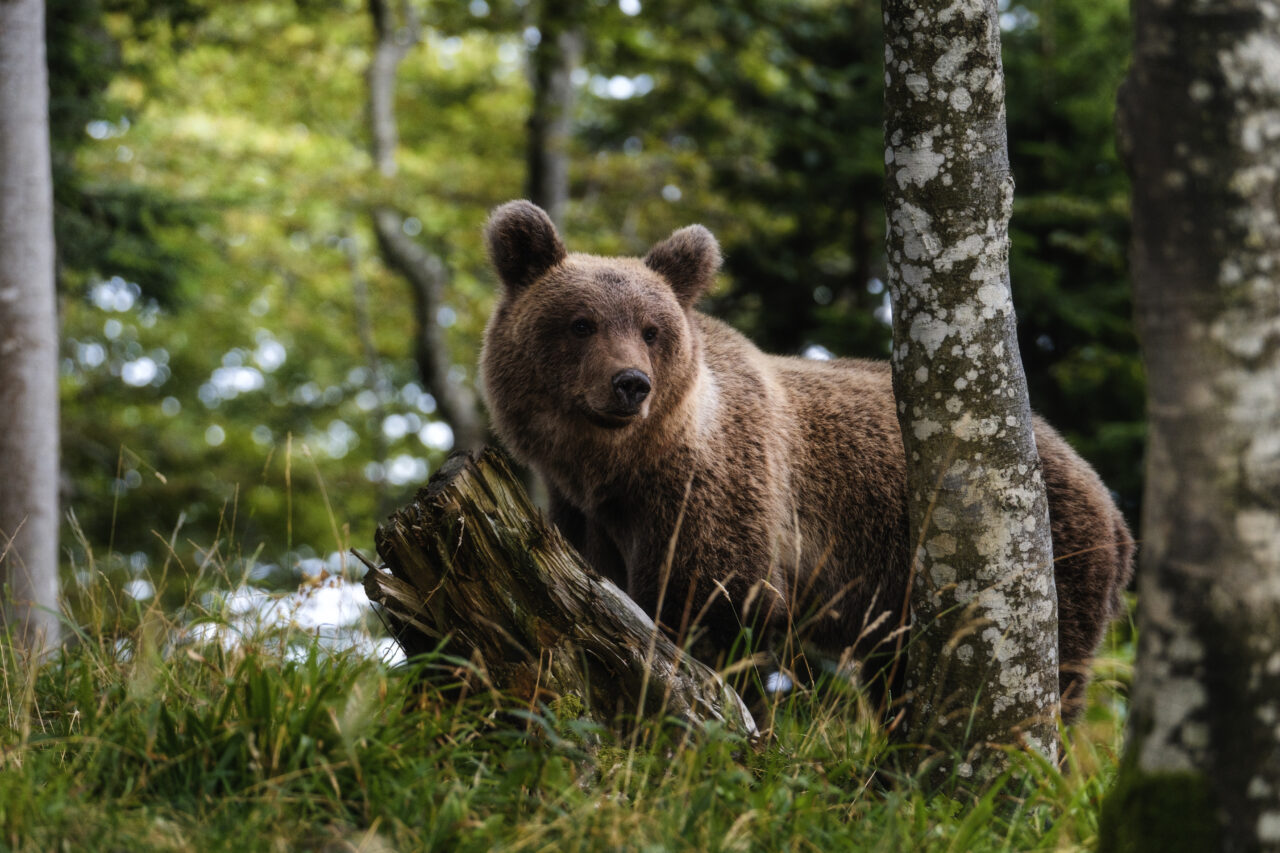
And then I feel movement. A brown bear. Not as a spectacle. Not as an attraction. As a presence. It has displaced a fox and a badger that were picking around the rocks ten minutes earlier. Massive, but silent. Cautious, but completely at home here. In that moment everything else disappears — the wait, the distance, the time. What remains is only something close to respect. This animal is extraordinary.
Slovenia has one of the highest brown bear populations in Europe, concentrated largely in the forests of Kočevska in the country’s south. Unlike wildlife tourism in many countries, encounters here are unhurried and managed with care for the animals. The hides are simple and the protocol is quiet. You do not go to watch. You go to be in the same forest, briefly, on their terms.
The Kočevska forests and the Kolpa river: discovery without signposts
The shift into Kočevska brings a change of pace. The Kolpa river moves slowly but persistently. Its canyons are deep and almost invisible until you are standing at the edge. The wind catches your hair — if it comes from the right direction, you can smell the Adriatic.
The viewpoints above the Kolpa canyon are not well marked. They offer no safety railings. They offer the feeling of finding something. I sit at the edge and watch the river far below. It is extraordinary precisely because there is nobody else here.
Kočevska Lake is different — more developed, busier. But it offers its own kind of rest. A glass of local wine with a view over the water is well earned after a day of new discoveries.
Kočevski Rog: ancient forest, full silence
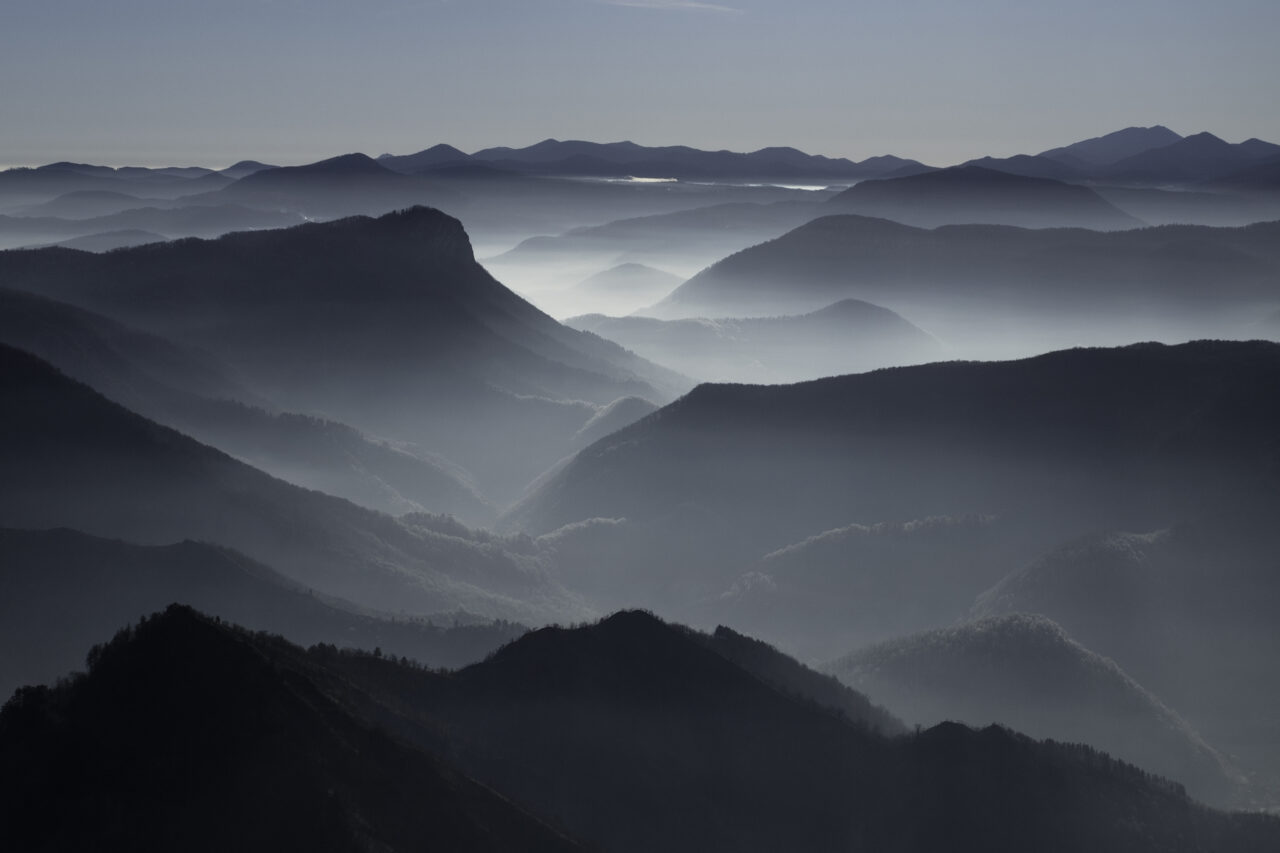
Kočevski Rog is not a place you understand quickly. It is a space where silence does not feel empty — it feels full. The forests are deep, close to impenetrable. Animal tracks are more common than footprints.
The solitude here is not an absence. It is the presence of something older. The old-growth stands need no explanation. They predate everything happening in the world outside. Walking among them, you notice that your sense of scale shifts.
More than one route
The southern Slovenia tour is just one of three guided Vantures. See what else is planned: All Vantures.
Back towards Ljubljana: the feeling that stays
On the return north, the landscape softens. Hayrack frames dot the Dolenjska fields — these traditional wooden structures are a distinctly Slovenian detail, built for drying hay and found almost nowhere else. The road past Bogenšperk castle and along the bends of the Sava brings a slow return to ordinary life.
I experienced something unexpected. Something I did not anticipate. That is still the best thing a journey can offer.
About the author
Nejc Trpin | @nejctrpinphoto | nejctrpin.com
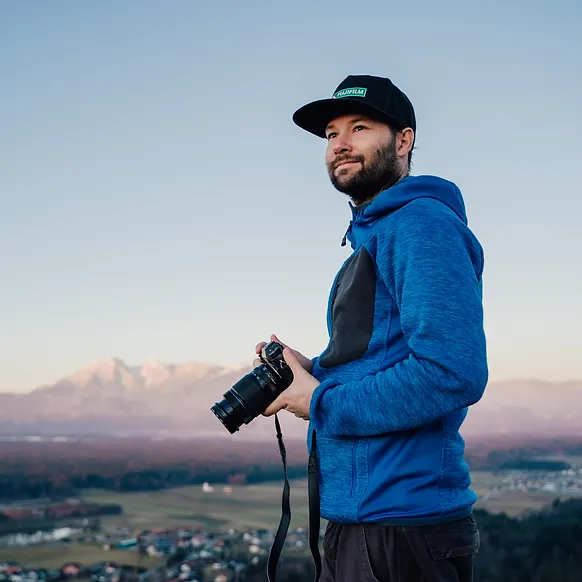
Geographer and tourist guide with over 15 years of experience leading trips across Slovenia and beyond.
Photographer published in National Geographic and Landscape Photography Magazine.
He grew up in the forests of Kočevska, now based near Škofja Loka. He specialises in the quiet roads, hidden viewpoints and the light that most people miss.
Interested in joining this tour?
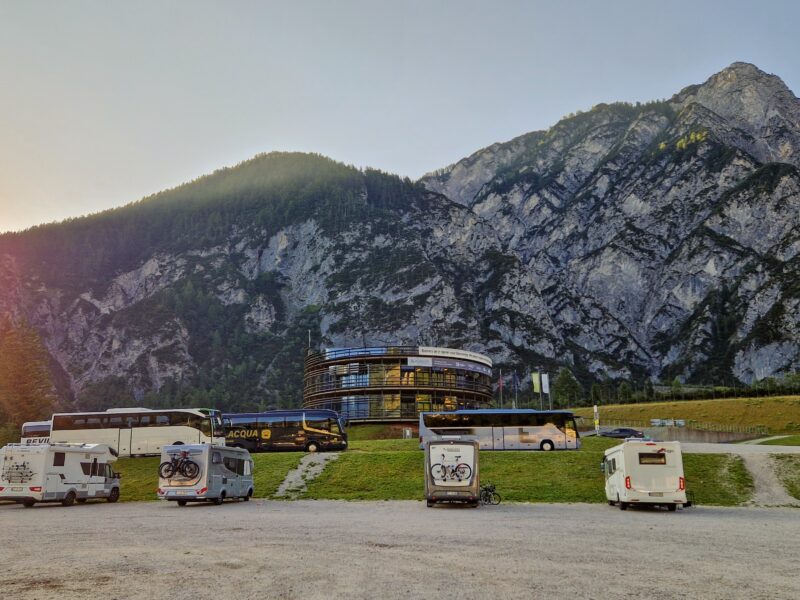
The tour of Southern & Eastern Slovenia takes you through the parts of the country most visitors never reach. Led by Nejc Trpin, in a small group of up to five campervans, over four or seven days.
Tour dates are not yet confirmed. If this route interests you, register now and you will be among the first to hear when dates are set.