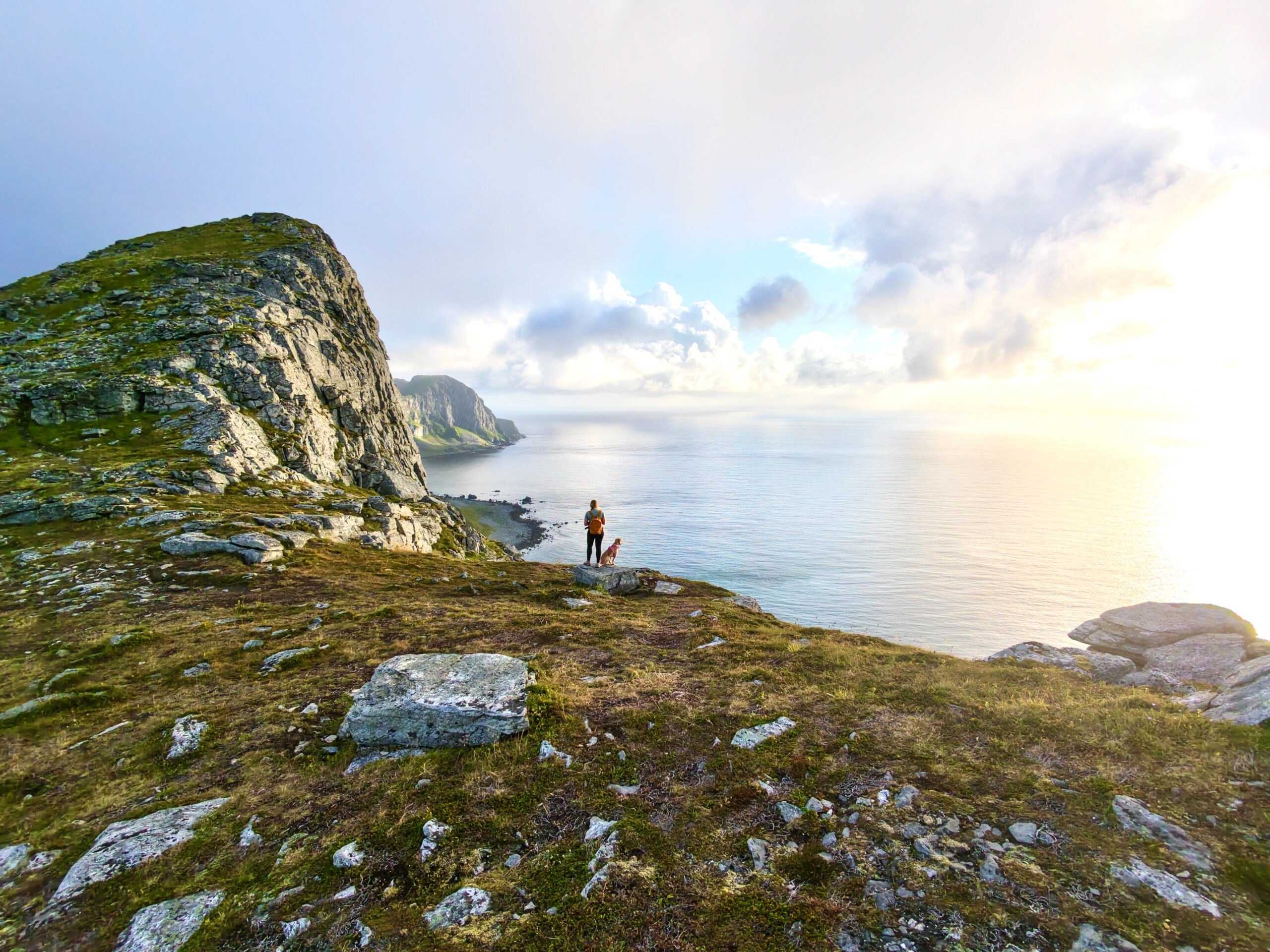
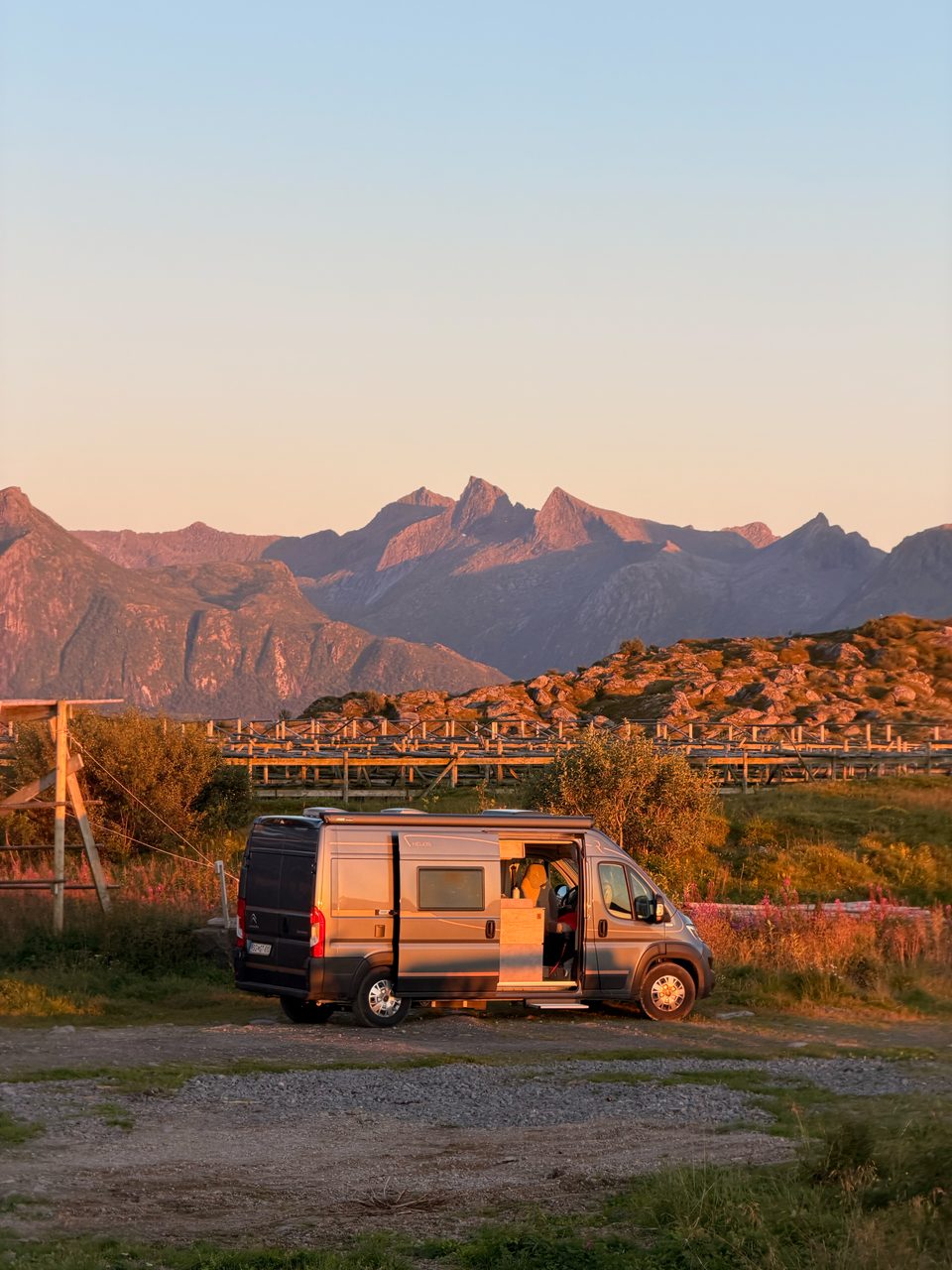
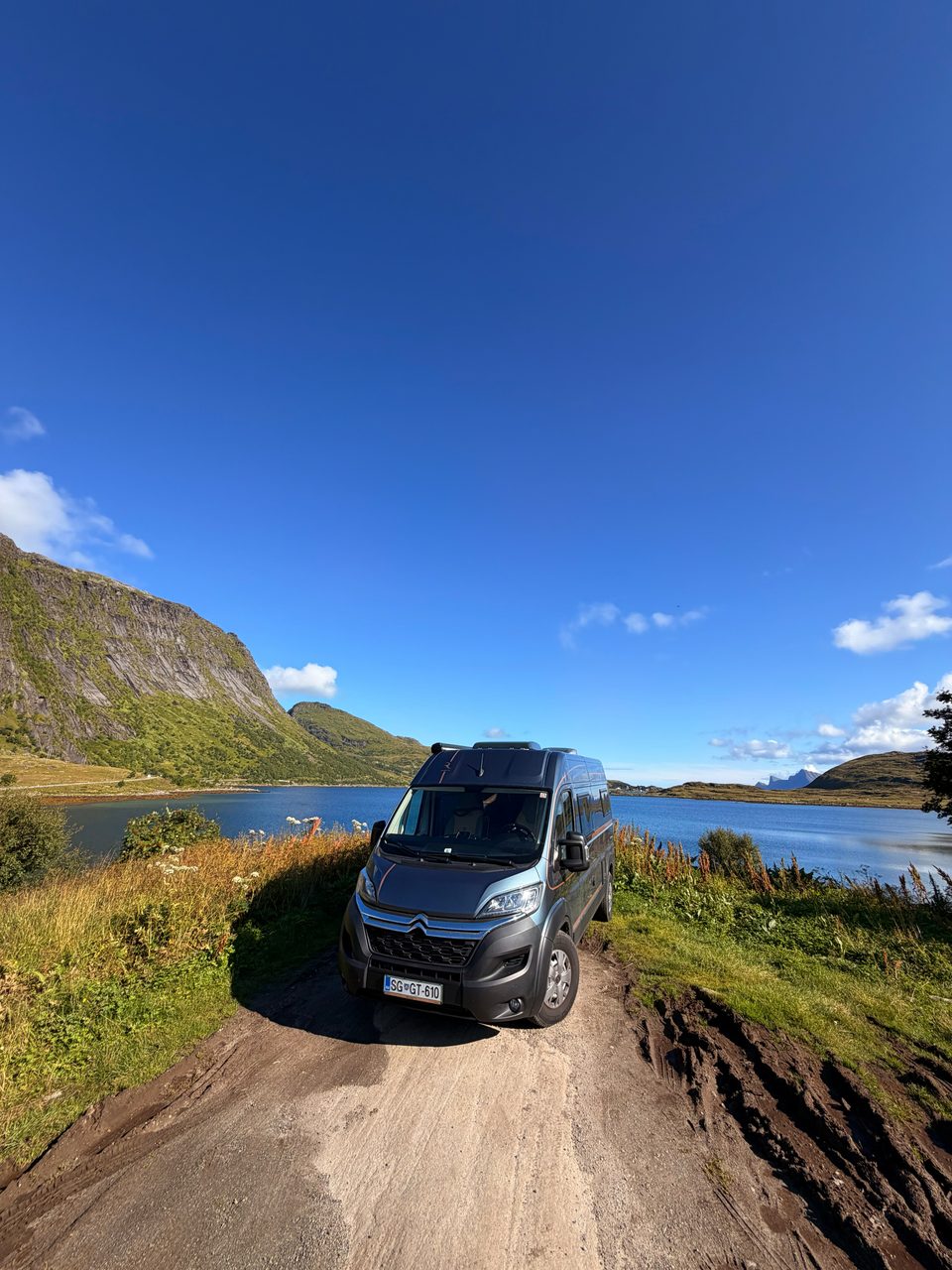
Urša Drofenik, an experienced traveller and mountain biker, spent 28 days alone with her dog Pega in a Robeta Helios. She wanted to stay within a 6-metre length for the trip, and the Helios – one of our more compact models – was the right fit. She covered close to 9,000 km, from Slovenia to Norway’s Lofoten Islands and the island of Senja in the far north, then back down through the fjords.
It’s a longer trip than most people take with us, and we’re not suggesting you repeat the route – most of our guests explore Slovenia, the Alps or the Adriatic coast over one or two weeks. We’re sharing it because it says something about what these vans can handle over distance. The same van, the same systems, apply either way.
Why Scandinavia
„People told me it was beautiful,“ Urša says. „So I had to go and see for myself. And yes – it’s beautiful. It’s far. And it’s worth it.“
She’d seen parts of Scandinavia before, on shorter personal and work trips, but this time she wanted to go further and stay longer. Her only fixed targets were the Lofoten Islands and Senja, just north of them. The rest of the route took shape as she went, depending on where she could fit in some mountain biking and which classic sights were along the way. Once she was on the road, she mostly followed it day by day, keeping half an eye on the weather and hoping for the best.
A month on the road
The route was long by any measure: north through Germany, a ferry to Sweden, then on to the far north of Norway via Lofoten and Senja, before turning south again through the fjords, a ferry to Denmark, and the long drive back.
A week to reach Lofoten. A second week there and on Senja. The final two weeks were the return leg, and bad weather more than once forced a change of plan along the way.
„Everyone following along who knew the conditions kept telling me how lucky I was,“ Urša says. „This year’s Nordic summer wasn’t much of a summer at all.“
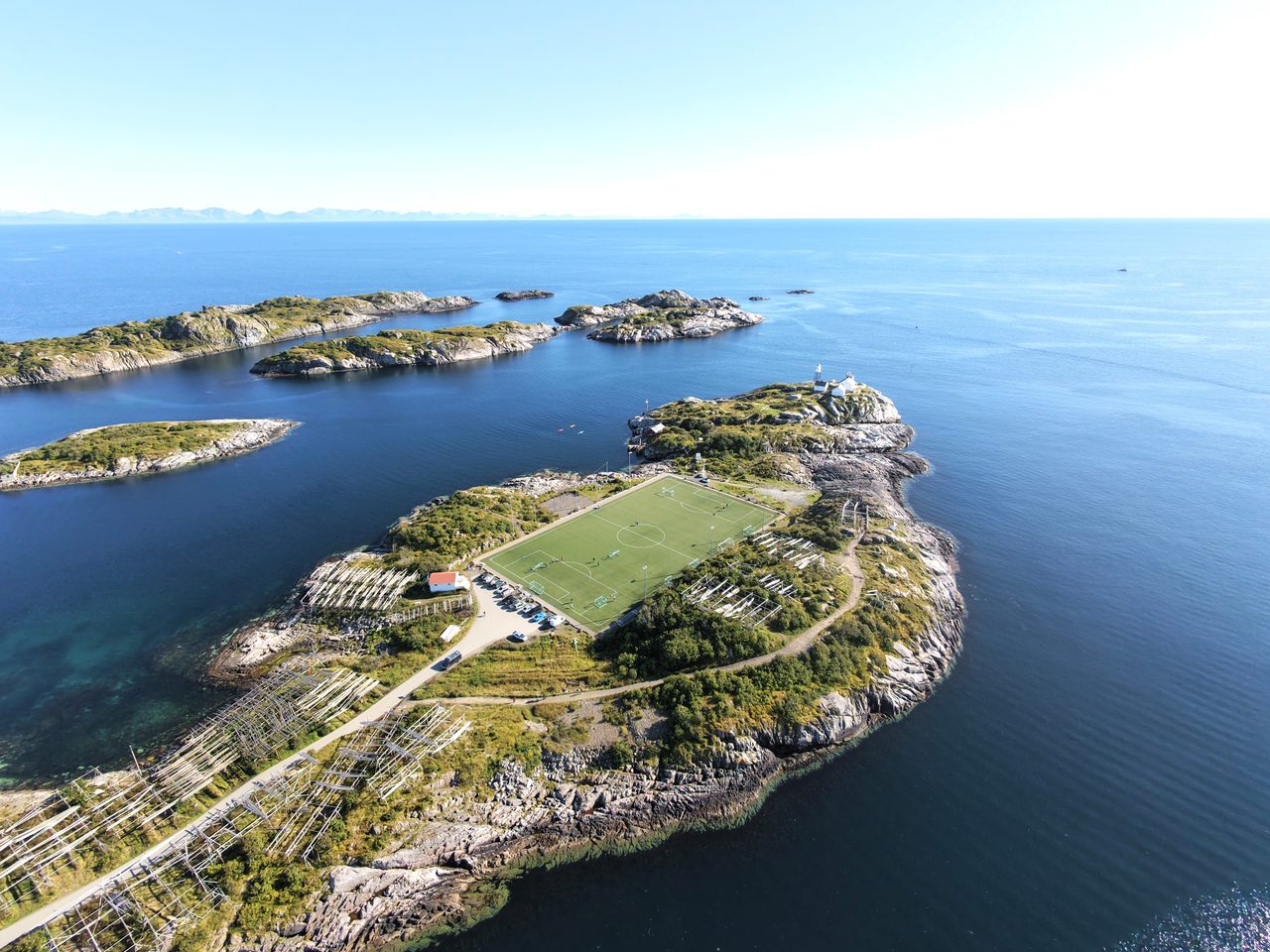
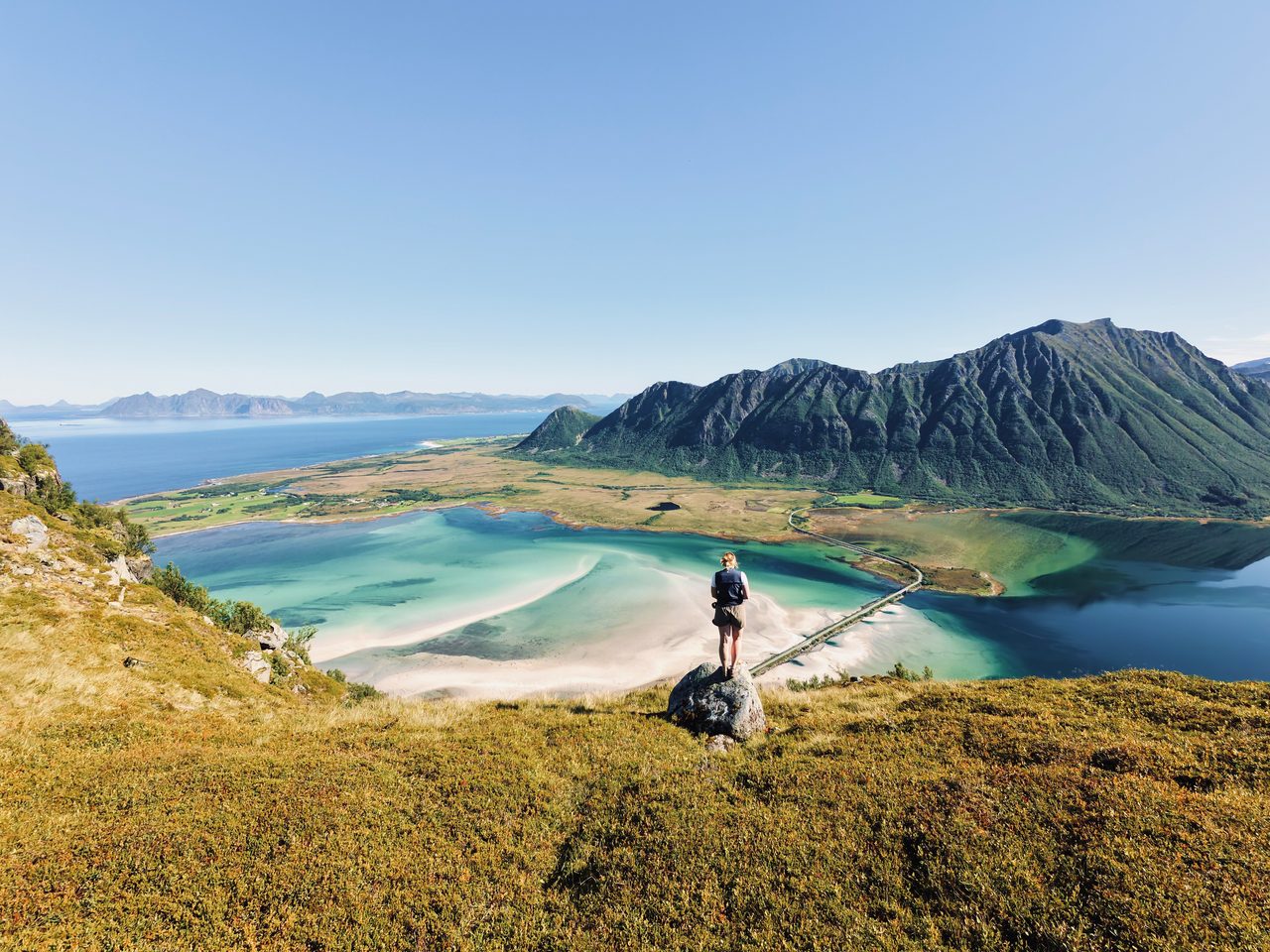
Lofoten and Senja – a test of size as much as scenery
Lofoten is popular, and touristy, and worth it anyway, in Urša’s view:
„Lofoten is something everyone who loves nature, mountains and the sea should experience. It’s popular, it’s touristy – and it’s worth the hype.“
Senja, the island just north of Lofoten, demanded the most attention behind the wheel of the whole trip. The roads there are genuinely narrow, shared by impatient locals and inexperienced renters who’d often just picked up their van and set off. It’s exactly the kind of road where a compact length starts to matter.
Telemark – the real surprise
The place that exceeded every expectation wasn’t in the north at all, but right at the end of the trip, in southern Norway.
„Telemark. It’s hard to describe, because it’s something you need to experience,“ Urša says. „After everything beautiful I’d seen over three weeks, right at the end I found somewhere I knew I’d come back to.“
The fjords, one of the best-known parts of the route, left less of an impression. Three days driving through them, she says, she was mostly just looking for a way out – maybe it was the weather, maybe the crowds and the hype. She’ll likely give them another chance another time.
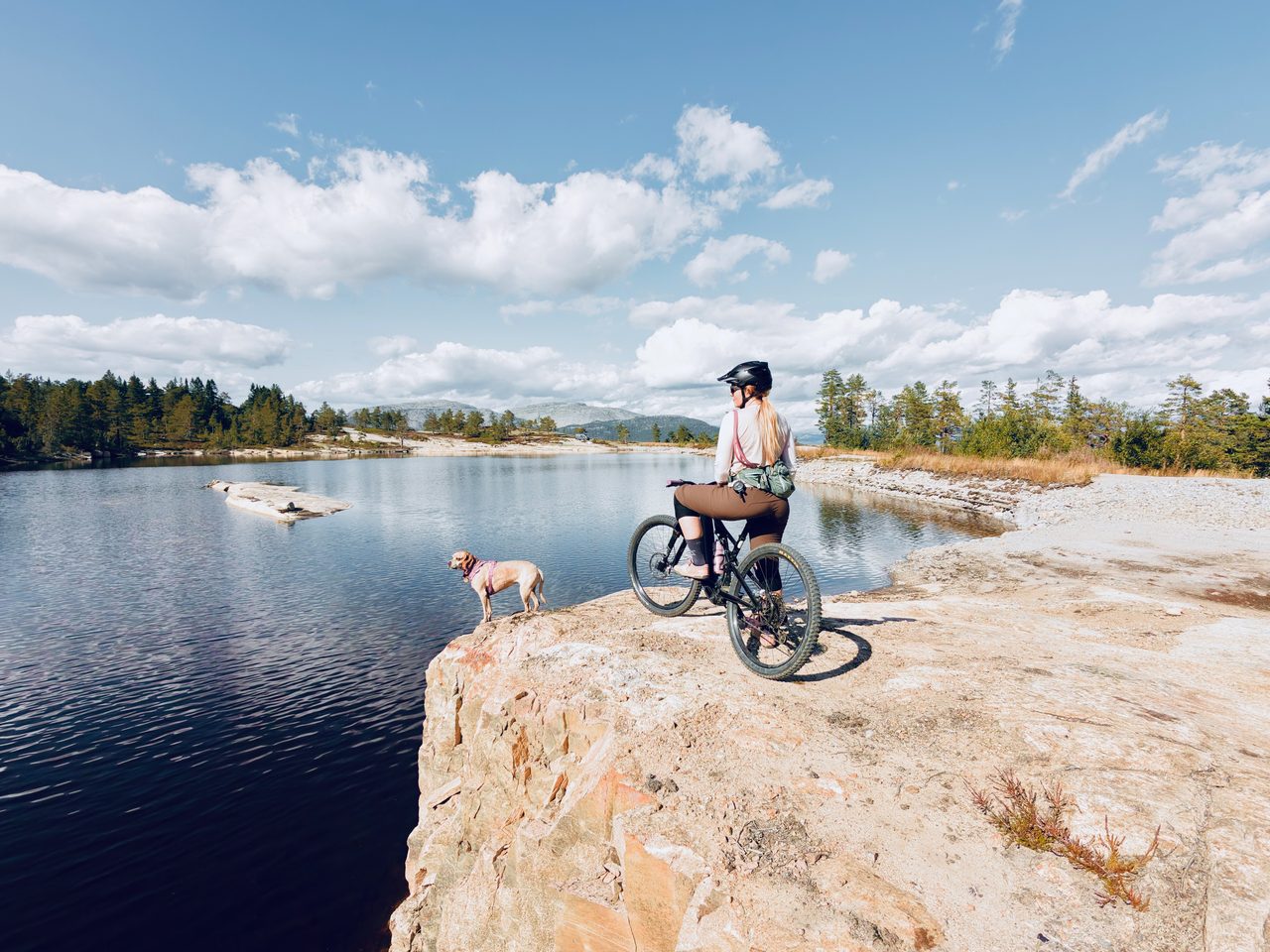
Three spots she still thinks about
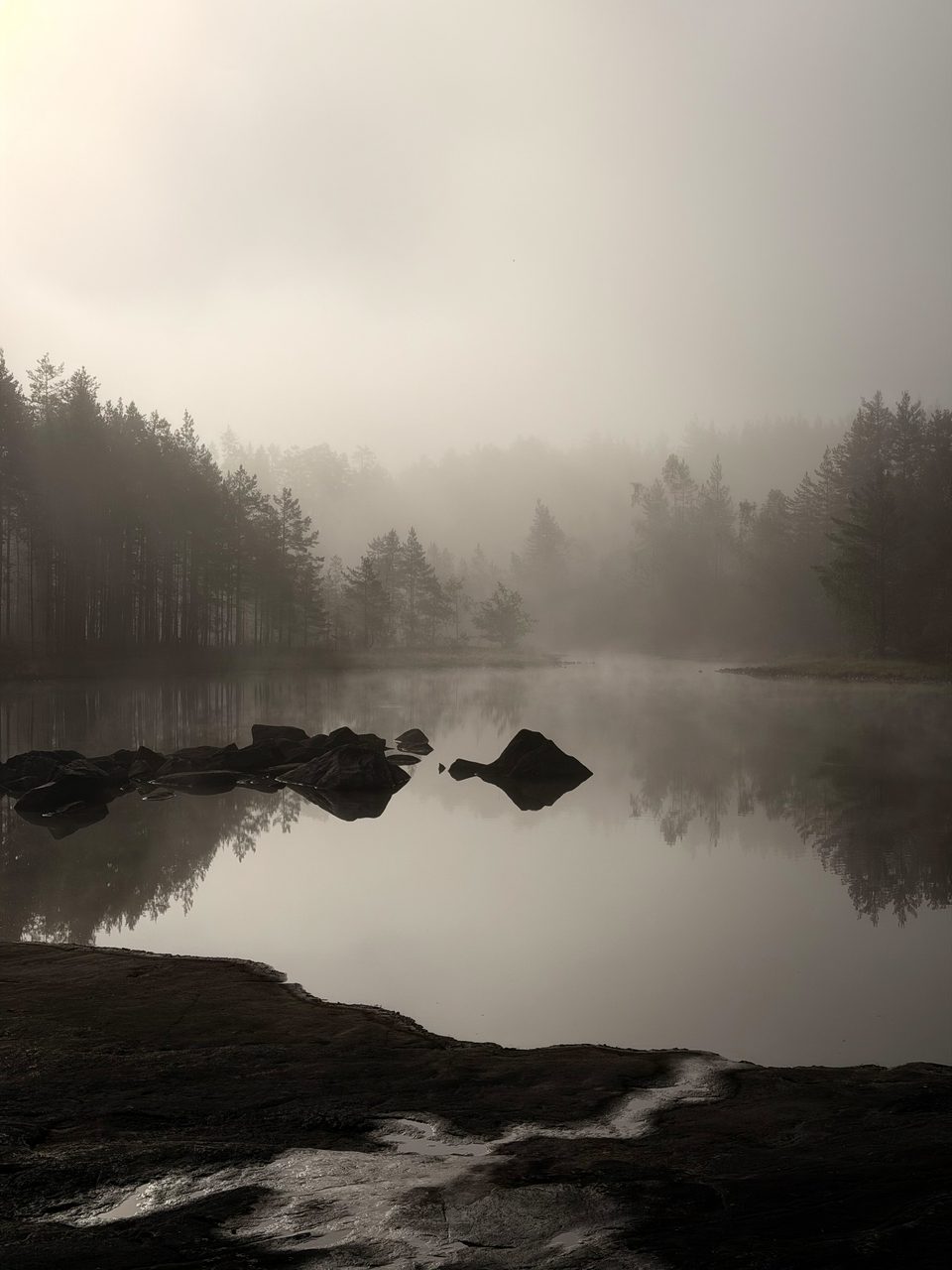
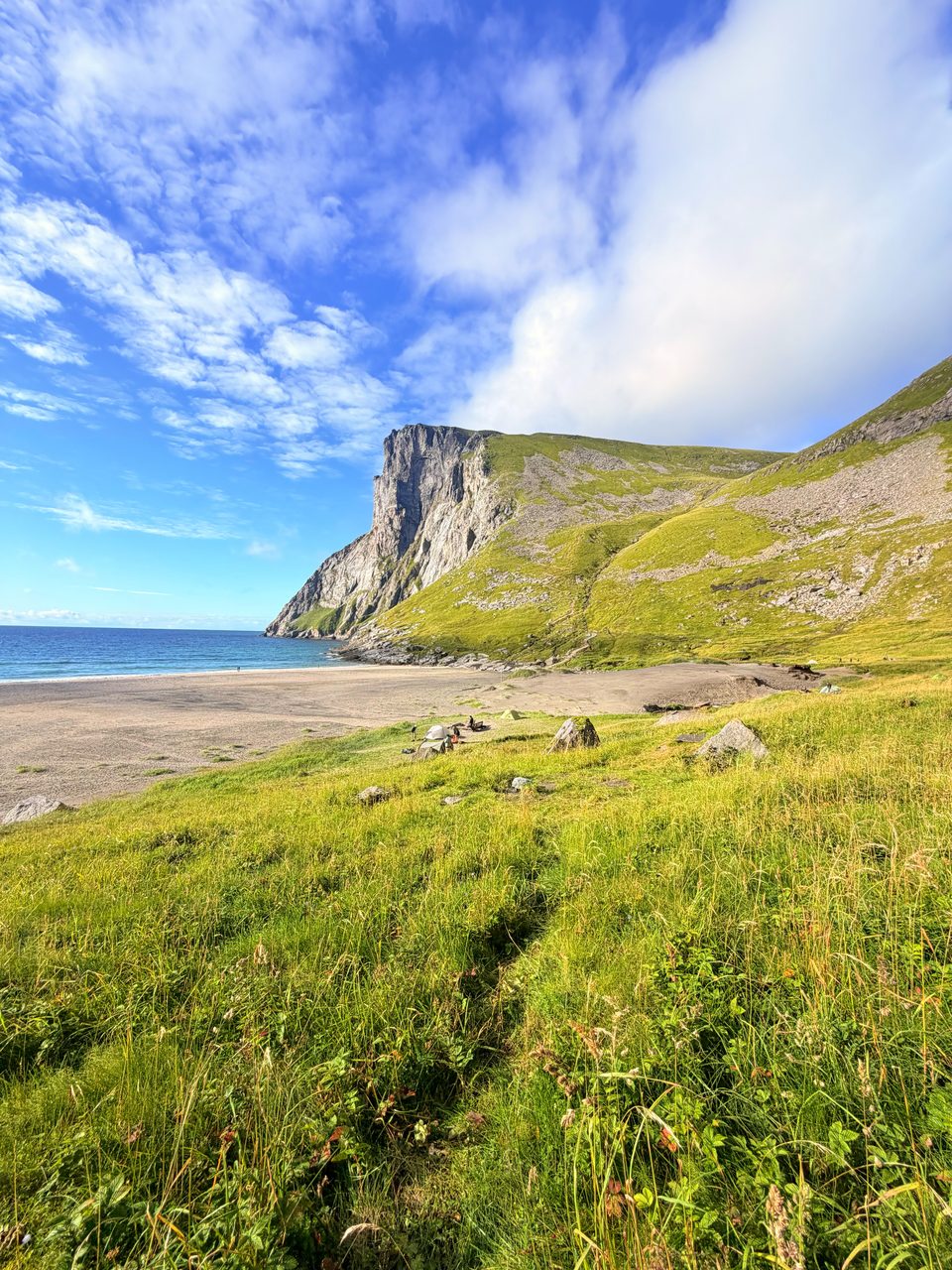
Near the trailhead for Kvalvika one of Lofoten’s best-known beaches: with so many visitors around, she’d stopped planning exact stops and simply pulled in wherever looked good. One evening that meant the trailhead itself – flat ground, a clear view, no traffic, and she was too tired to go any further. It turned out to be one of the best spots of the trip.
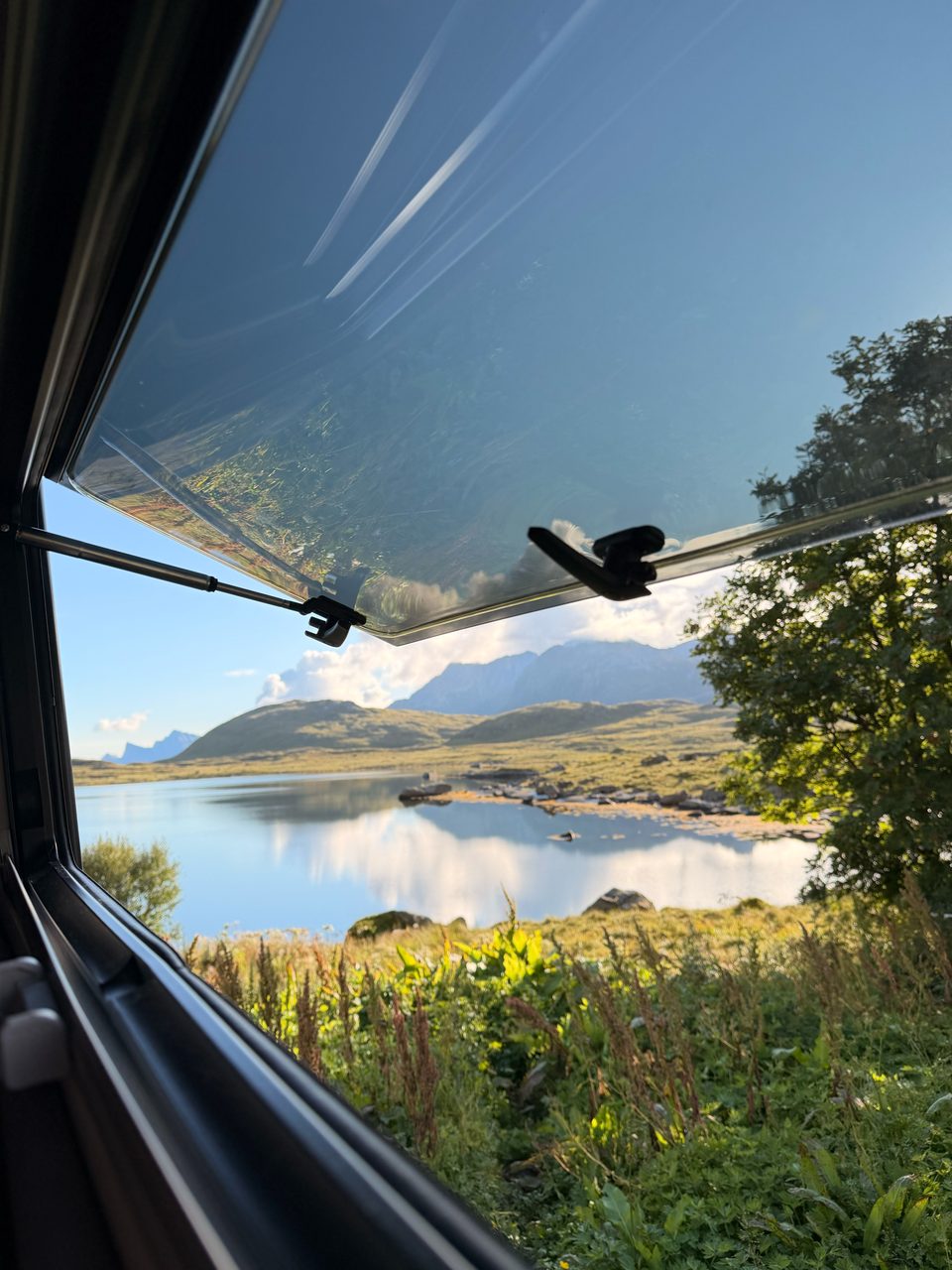
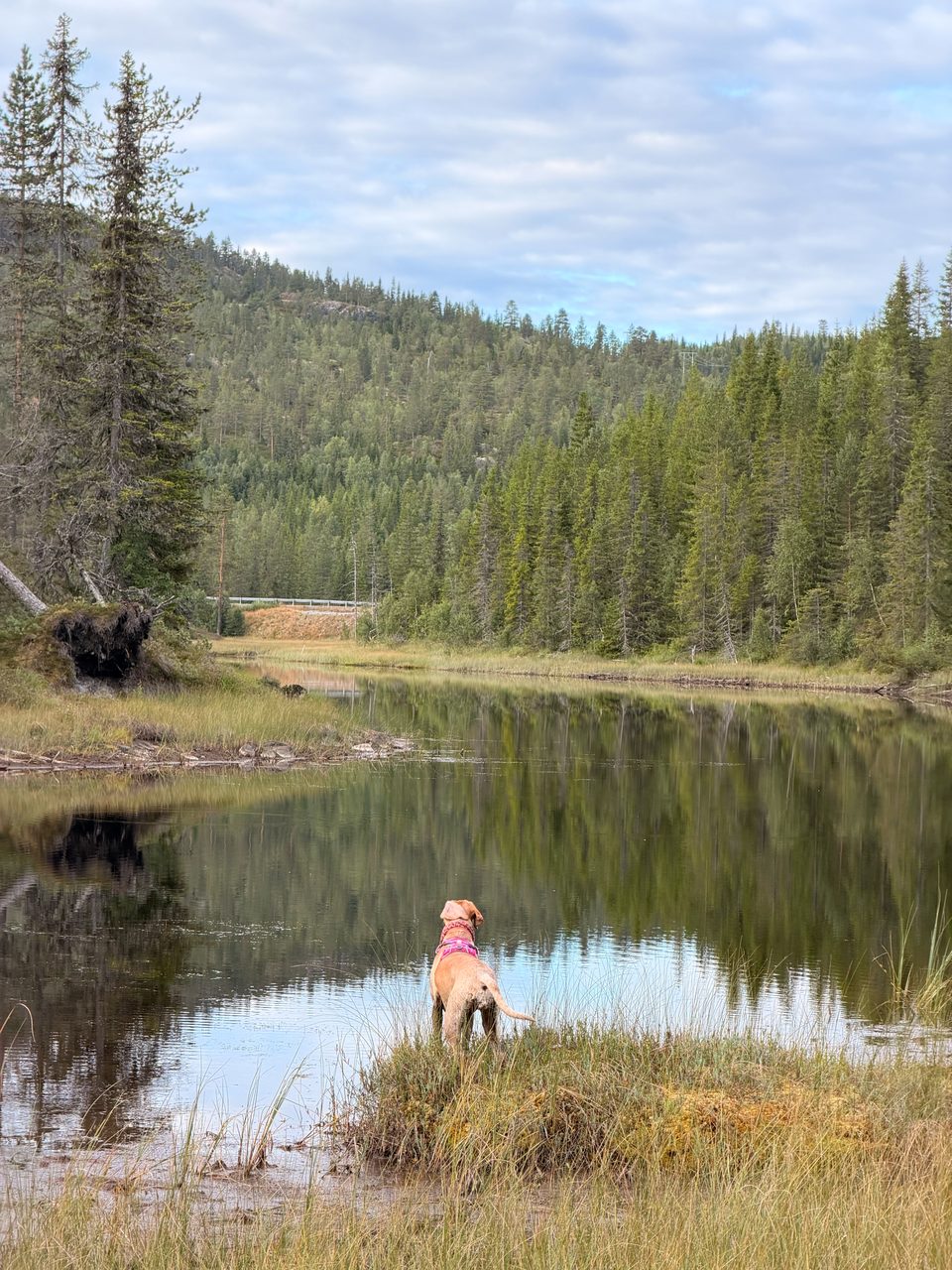
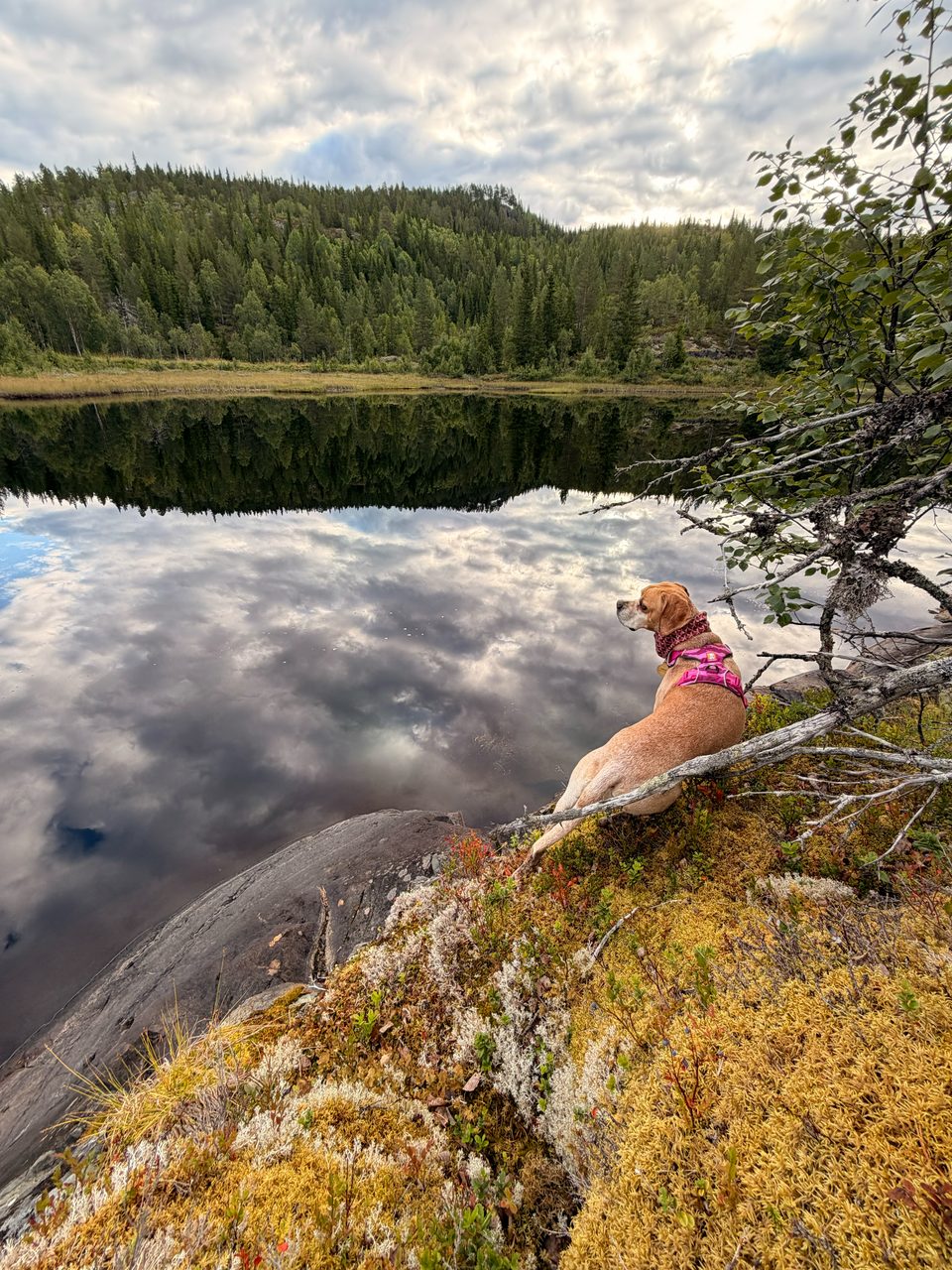
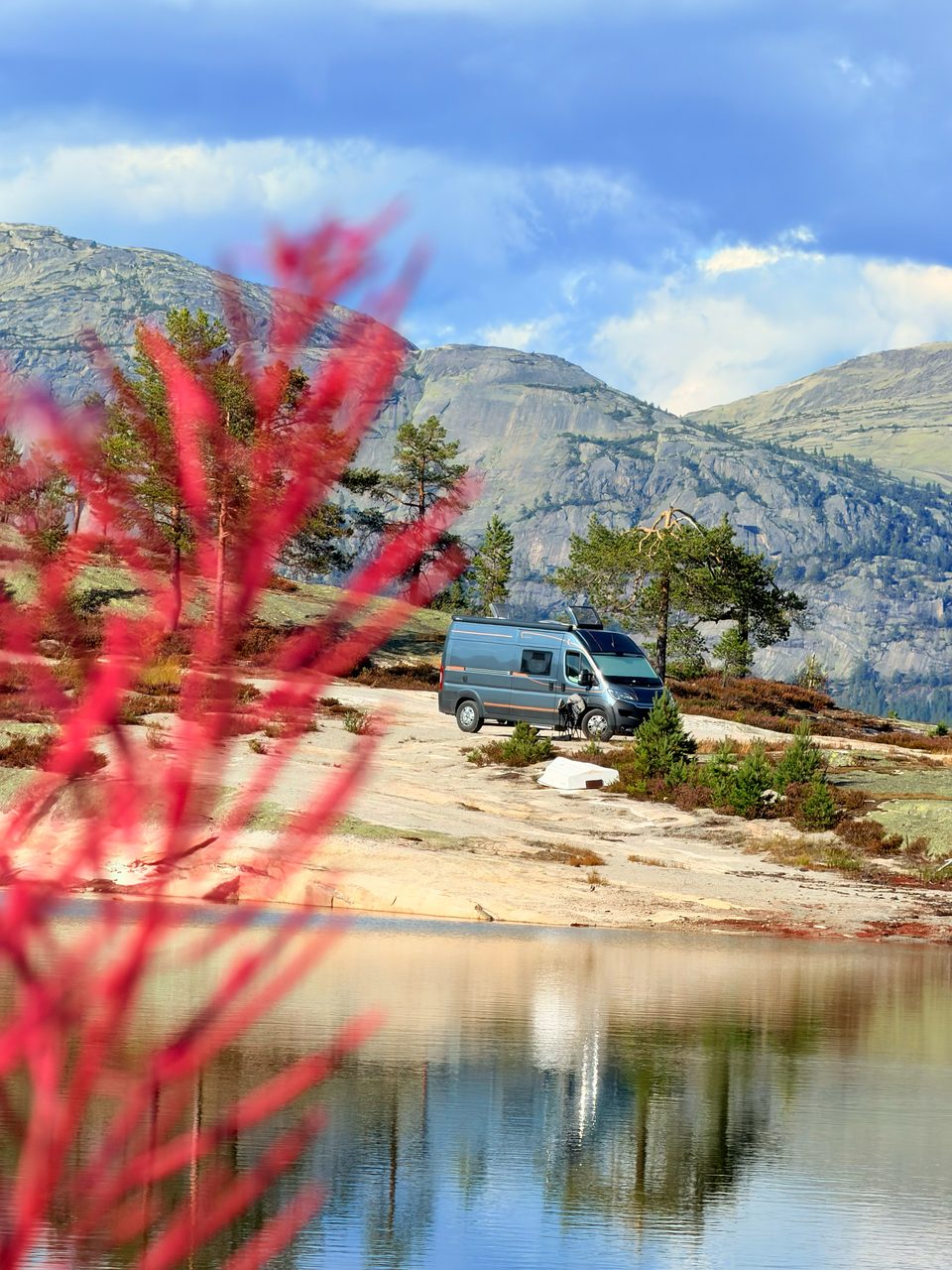
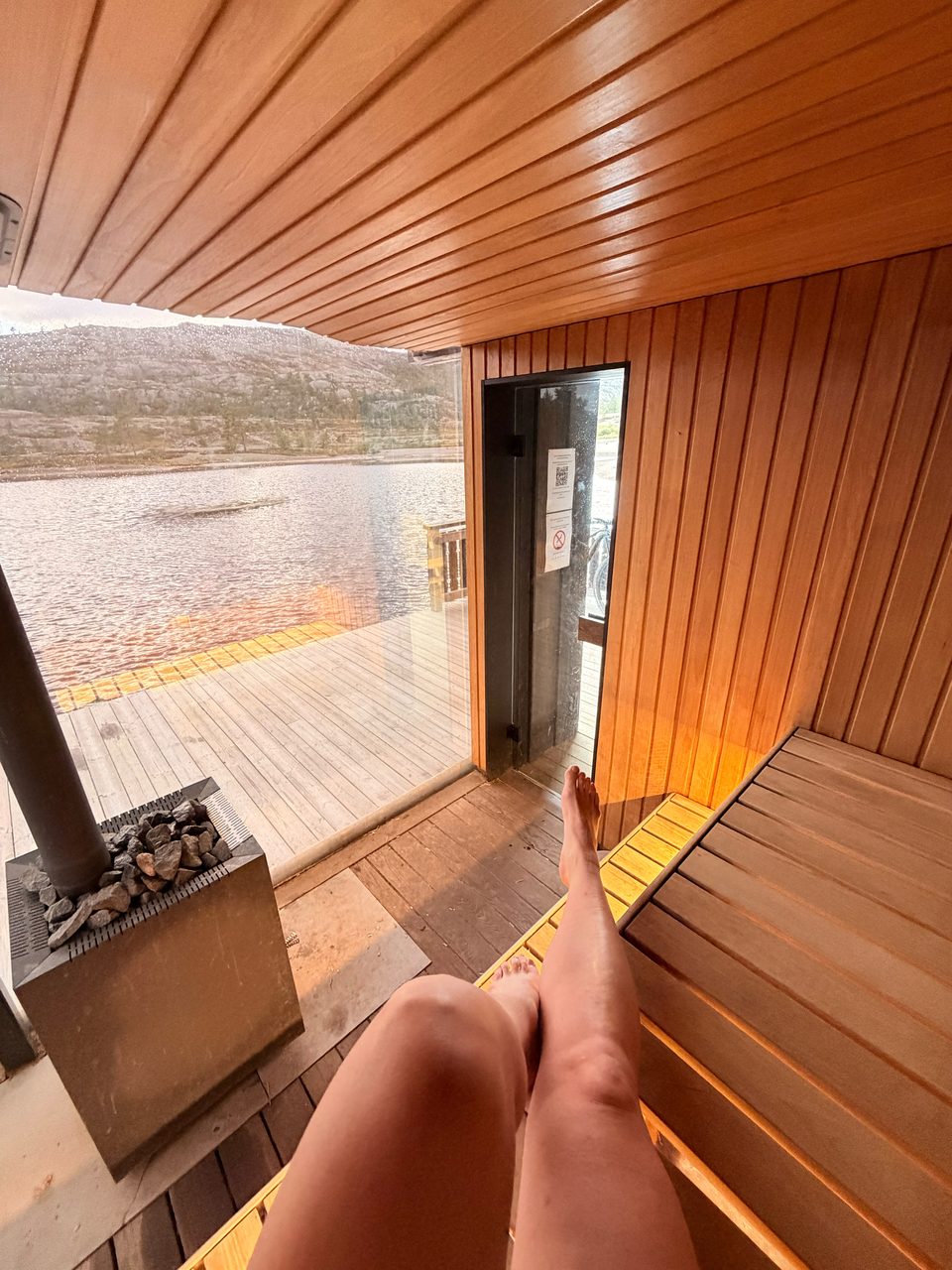
Vradal, in Telemark: she found it through a mountain-biking route app, then checked the map for a flat spot near the lower cable-car station. A short walk with Pega led to a flat stretch of rock by a lake, reachable by van. She stayed two days, helped along by a lakeside sauna with hill views, a five-minute bike ride away.
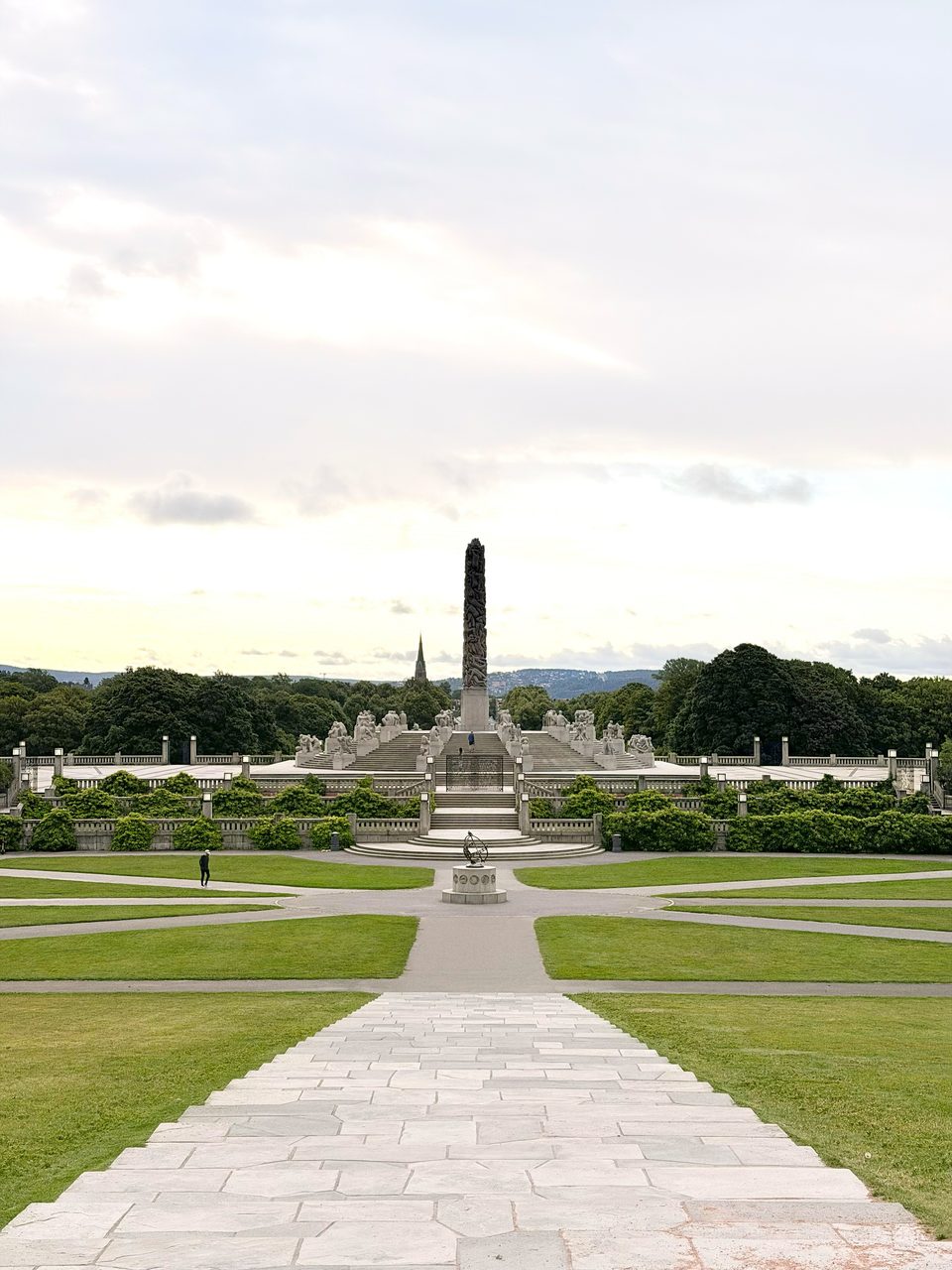
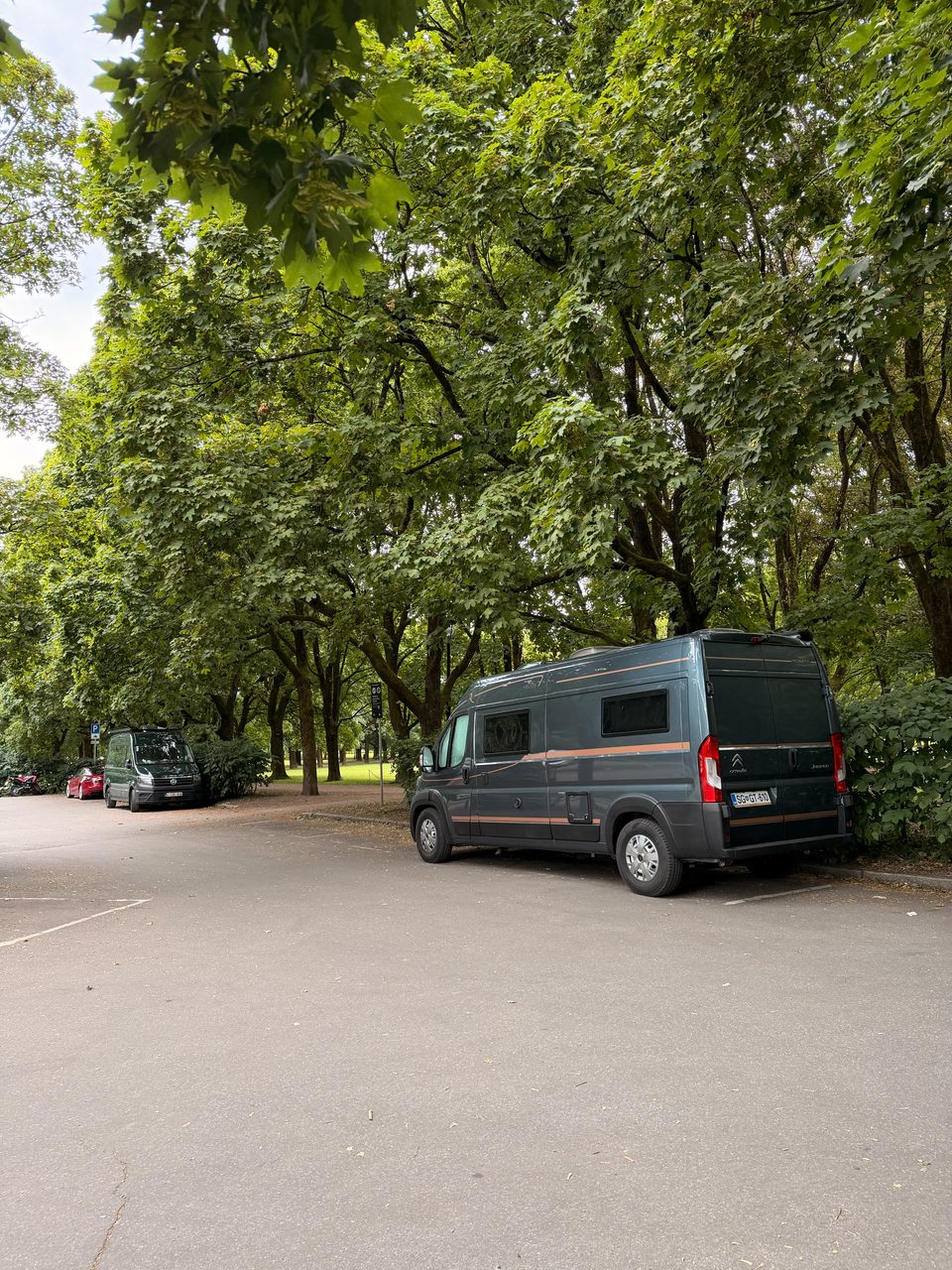
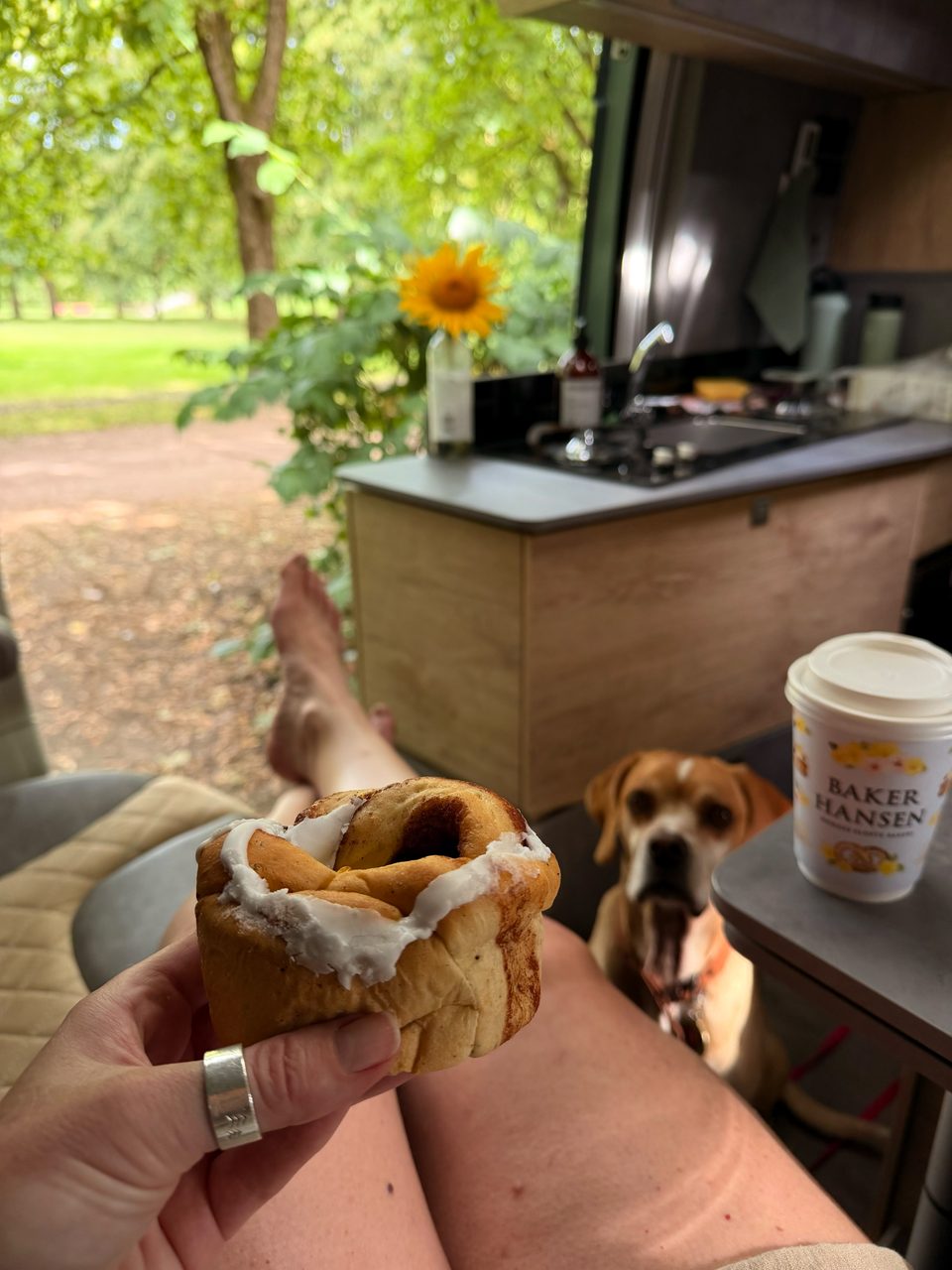
Beside a city park in Oslo: not every stop needs to be remote. Free overnight parking next to a park, from 8 pm to 9 am, meant a quiet start the next morning – a walk through the park to a bakery for a cinnamon roll and a chai latte before the next leg.
A daily walk, with a dog on board
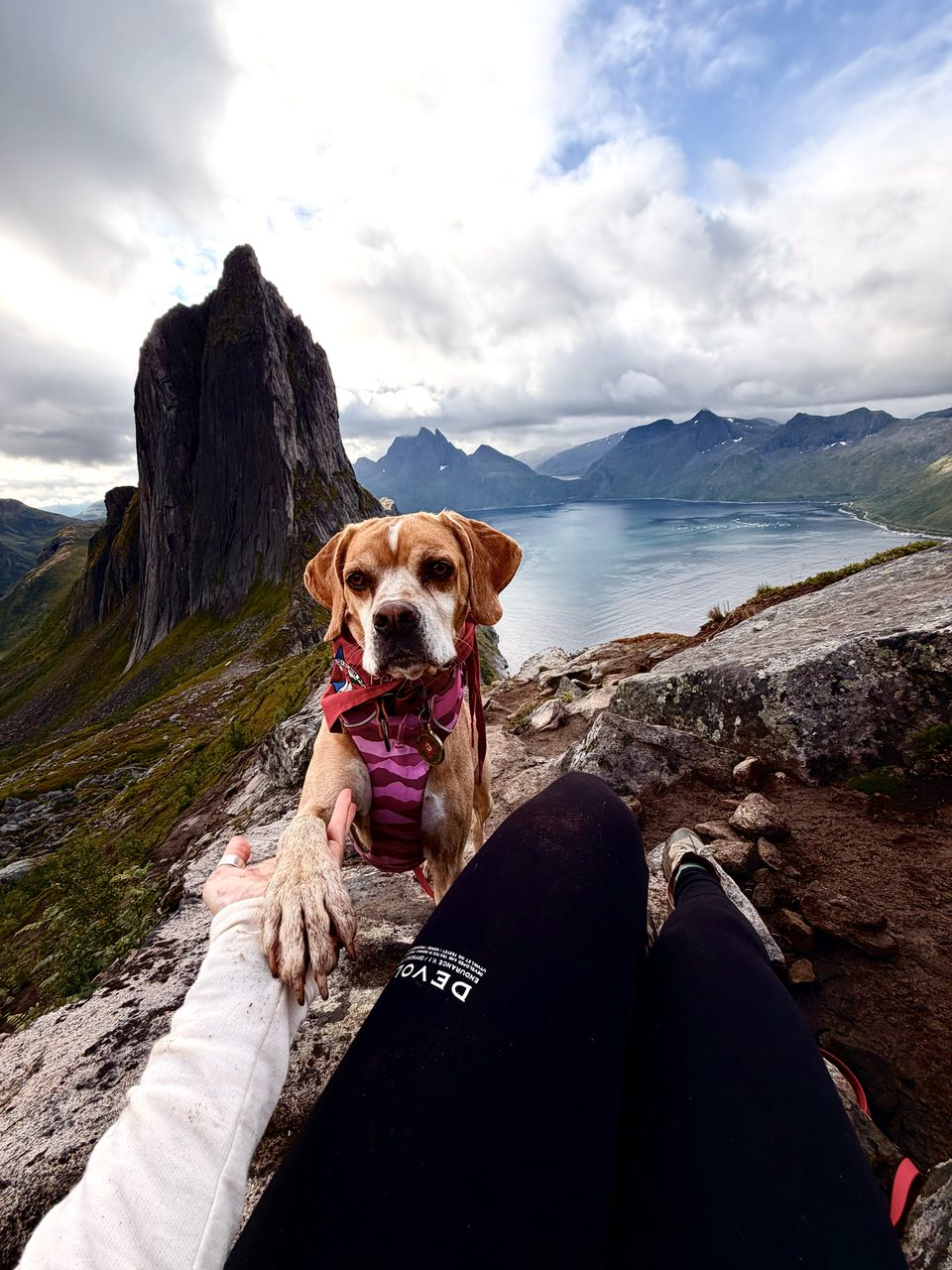
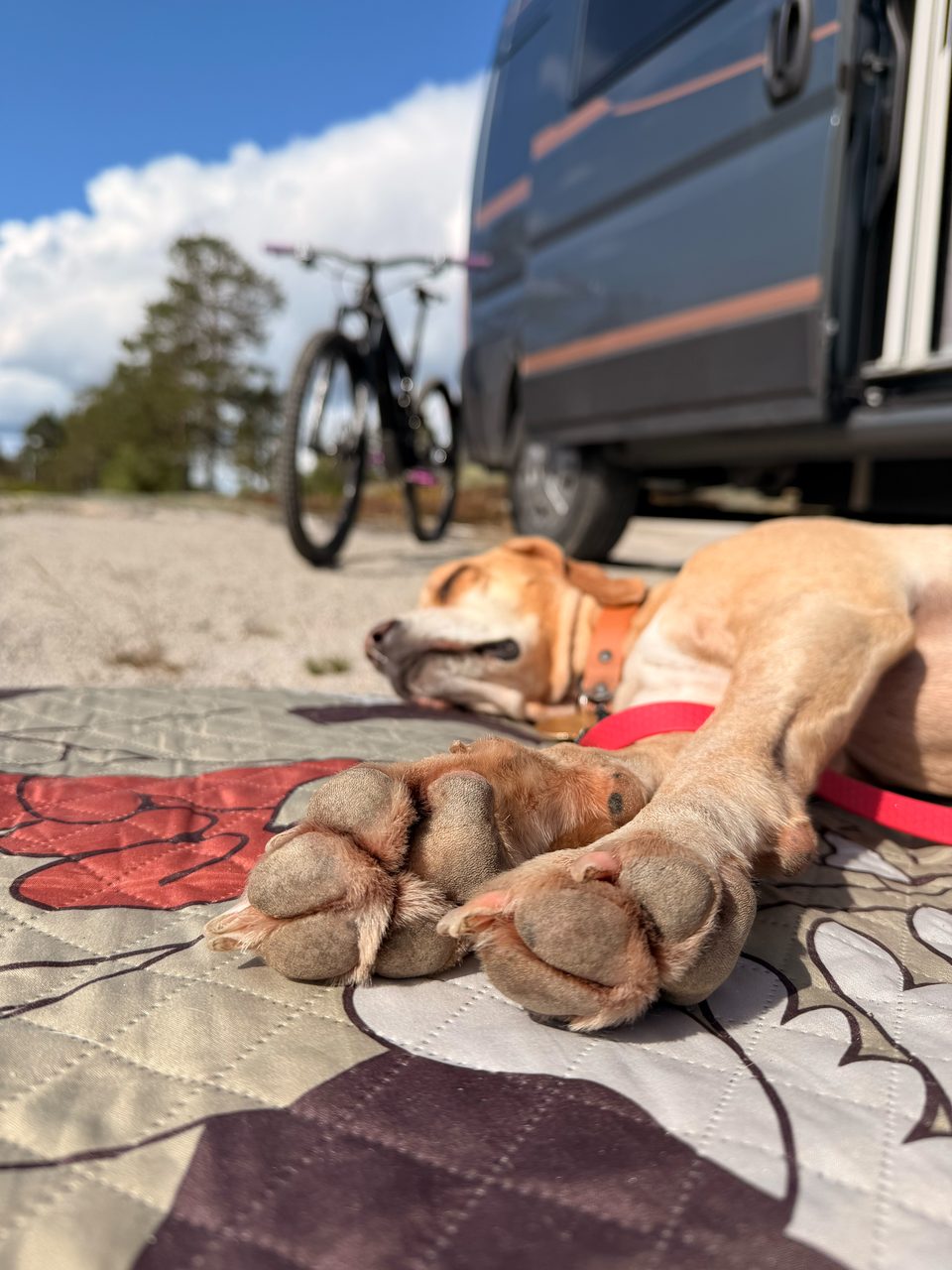
Urša wasn’t travelling with family, but with her dog Pega, which came with its own routine. After a long day of driving, mornings and afternoons were set aside for a proper walk or hike, so she tended to avoid busier spots and campsites in favour of quieter, more out-of-the-way locations.
„That’s exactly what kept me going – there’s something about falling asleep and waking up in a remote spot,“ she says.
Living off-grid for a month
About 80% of her nights were spent wild camping. For the rest, she found a campsite or official stopover to shower, empty the waste tank and refill the water. She planned the route as she went using the Park4Night app, and kept finding spots that weren’t even listed on it – and were even better.
Campsites and stopovers cost between €30 and €60 a night per van, regardless of how many people were inside.
„Most of the time there’s no one around to pay – just a sign with instructions and a QR code or bank account to transfer the fee to,“ she says.
Wild camping is allowed almost everywhere that doesn’t explicitly prohibit it, as long as you stay at least 150 metres from houses – in practice, that means pull-offs on quiet roads, car parks, rest areas and forest tracks. Scandinavia, she says, is unusually well set up for campervans: wherever she went, there was somewhere to empty waste water and the toilet, and to refill drinking water. For a month on the road with no backup plan, that mattered.
Tolls, ferries and the Flyt chip
For Norway’s tolls and ferries, it’s worth ordering a Flyt chip in advance – it logs tolls and ferry costs automatically, at a discount, and settles the total online afterwards. Longer ferry crossings, such as Germany–Sweden and Norway–Denmark, are worth booking ahead too, both for a better price and to fit your schedule. Urša found it cheaper, and more convenient, to cross to Sweden overnight rather than during the day.
What she’d pack again
- Clothing: merino base layers. They keep you warm, don’t start to smell, and still work when soaked through. She washed hers once in a month.
- Footwear: proper boots are non-negotiable. „In Scandinavia,“ she says, „water runs uphill, not down.“
- A small vacuum cleaner – the one thing she missed, especially travelling with a dog.
What this means for a shorter trip
Few of our guests will take a month to reach the Arctic Circle, and that’s rather the point of sharing this story: the same van that handled 28 days and 9,000 km without trouble is just as suited to a one- or two-week trip through the Alps, Slovenia or the Adriatic coast.
If you do have longer, Urša’s advice is to build in more time, not less – she’d have liked another week herself. If you have less, pick one region rather than rushing the whole of Scandinavia: skip Lofoten and Senja, and the lower half is a comfortable two to three weeks.
As for timing: summer means long days and, in her experience, steadier weather, but also more visitors. Looking back, she’d choose August or September instead.
Who it suits
A trip like this means a lot of time behind the wheel and isn’t really built for meeting people along the way – you’ll see and experience a great deal, but you won’t make many new friends on the road. For anyone who hasn’t rented a campervan before, Urša’s advice holds regardless of distance:
„Start with a short trial weekend somewhere like the Italian Dolomites,“ she says. „Just to see what it’s like to drive on regional roads, find places to stay overnight, and get a feel for manoeuvring a van at all.“
One thing also caught her off guard: in Scandinavia, by her estimate, around 95% of the people she saw behind the wheel of a campervan were women. The first day, it made her feel like she was doing something unusual – travelling alone, and as a woman. By the time she reached Scandinavia, it just felt completely ordinary.
Ready to put a Robeta campervan to the test?
Whether that’s a long way north or a slower week along the Adriatic, it’s built to handle it. Explore the fleet and start planning your getaway.